
Artificial Intelligence isn’t just a buzzword anymore; it’s reshaping how we live and work daily. From personal assistants in our phones to complex algorithms driving business decisions, AI is everywhere. You might be using AI more than you realize. It’s in the recommendations Netflix offers, the voice commands Siri understands, and even in the way Google sorts search results. But beyond these daily conveniences, AI holds the potential to address some of society’s most pressing issues, like healthcare accessibility and climate change.
Table of Contents
- Introduction: Navigating the World of AI Tools and Applications
- Understanding the Basics: What Are AI Tools?
- Exploring Popular AI Tools Across Industries
- How AI Tools Are Transforming Business Operations
- Challenges and Considerations When Implementing AI Tools
- Future Trends in AI Tools and Their Potential Impact
- Conclusion: Harnessing the Power of AI Tools for Future Success
This guide dives into the intricate world of AI tools and applications. We’ll explore how they’re transforming various industries, from healthcare to finance, and what that means for the future of work. AI is not just about automation; it’s about enhancing human capabilities. Whether you’re a seasoned tech professional or a curious newcomer, understanding these tools can give you an edge. Knowing how AI applications work can help you make informed decisions, whether you’re looking to implement AI solutions in your business or simply want to keep up with technology trends.
But it’s not all sunshine and rainbows. While AI offers incredible benefits, it also raises important ethical questions and practical challenges. We’ll look at the good, the bad, and the complicated aspects of AI. How do we balance innovation with privacy concerns? What happens when AI makes a mistake? By the end of this guide, you’ll have a comprehensive understanding of AI’s role in today’s world, and you’ll be better equipped to engage with this fascinating technology. AI is not just a tool; it’s a partner in navigating the complexities of modern life.
Introduction: Navigating the World of AI Tools and Applications
Artificial Intelligence (AI) tools have become a staple in both professional and personal realms, offering unprecedented capabilities. From data analysis to creative content generation, these tools are reshaping how we interact with technology. The key to unlocking their potential lies in understanding their diverse applications and the impact they have on various industries.
A prime example of AI’s influence is in the healthcare sector. Tools like IBM Watson Health are revolutionizing diagnostics by analyzing vast datasets to identify patterns that even seasoned professionals might miss. This not only accelerates the diagnostic process but enhances accuracy, potentially saving lives. In my experience, the integration of AI in healthcare also faces challenges such as data privacy concerns and the need for robust regulatory frameworks.
In the business world, AI tools like Salesforce’s Einstein provide insights that drive decision-making. By predicting customer behavior and optimizing marketing strategies, these tools help companies stay competitive. What this means in the real world is that businesses can now tailor their services with precision, increasing customer satisfaction and retention. However, a common mistake I see is companies relying too heavily on AI without considering the human touch, which remains crucial in customer interactions.
Pros of AI tools include increased efficiency, the ability to process large amounts of data swiftly, and cost reduction in operations. Cons, however, include the potential for job displacement and the ethical considerations surrounding AI decision-making. Balancing these aspects requires a nuanced approach, ensuring AI tools complement rather than replace human roles, fostering collaboration between machine intelligence and human insight.
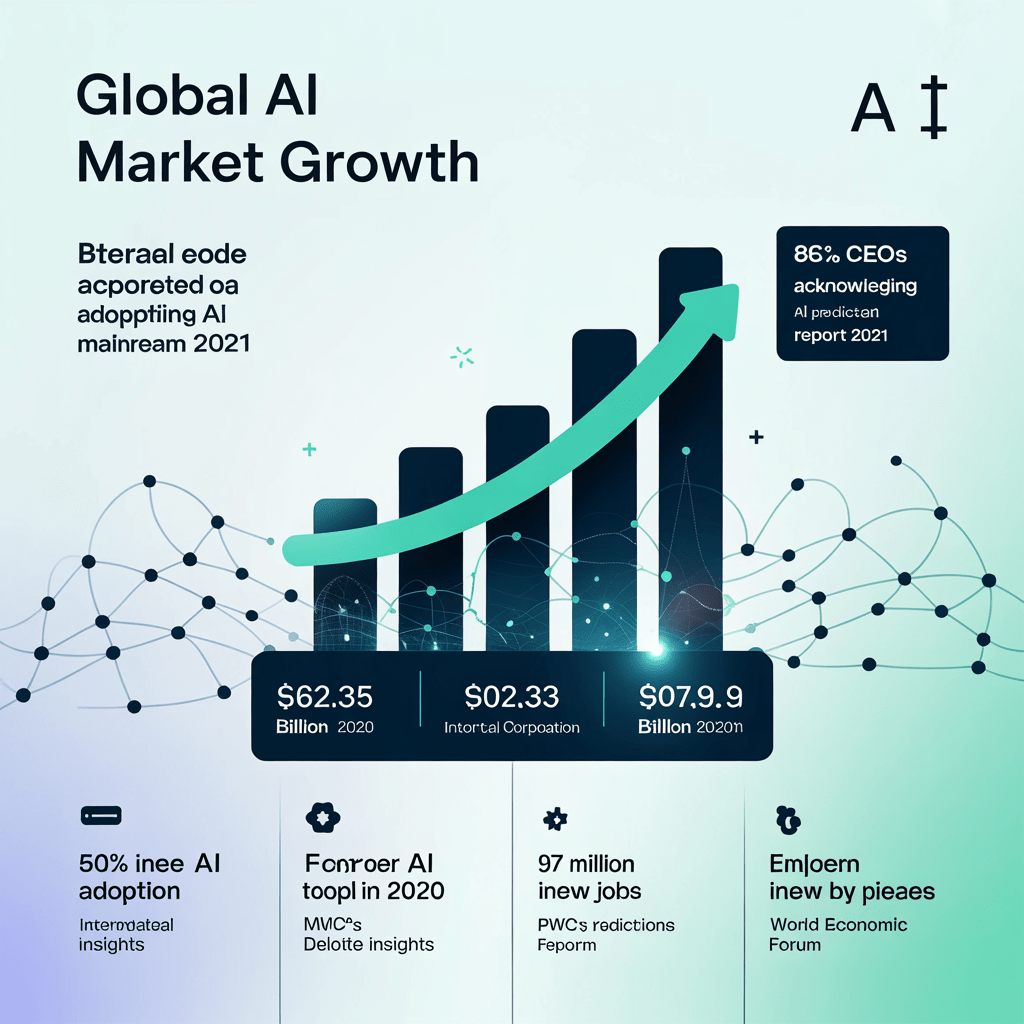
This professional infographic provides a compelling overview of crucial statistics in the AI industry, illustrating the rapid growth and widespread adoption across sectors. It visually conveys the market expansion, high adoption in enterprises, sector-specific usage, job creation impact, and forecasted spending in AI technology, backed with reputable sources. Ideal for business presentations, reports, and informative content on AI trends and forecasts.
Understanding the Basics: What Are AI Tools?
Understanding AI tools starts with recognizing them as sophisticated software designed to perform tasks that typically require human intelligence. These tasks range from simple automation to complex decision-making processes. In my experience, the true value of AI tools lies in their ability to enhance productivity and decision quality across various industries.
Consider natural language processing (NLP) tools like Grammarly. They help users improve their writing by suggesting grammar corrections and style enhancements. This isn’t just about fixing typos—it’s about refining communication. Grammarly processes vast amounts of text data to understand context and intent, making it more than just a spell checker. It’s an assistant that learns and adapts.
Then there’s machine learning (ML) platforms like TensorFlow. These tools enable developers to build, train, and deploy machine learning models. TensorFlow’s strength is its flexibility. It can be used for everything from image recognition to creating algorithms for predictive analytics. The key takeaway here is that ML tools have democratized access to advanced data analysis techniques, which were once the sole domain of data scientists.
However, it’s essential to recognize the limitations. AI tools can sometimes lead to over-reliance, where human oversight is reduced, potentially causing errors if the AI misinterprets data. Another con is the steep learning curve for some tools, which can be a barrier for smaller companies without the resources for extensive training.
On the flip side, AI tools offer significant pros. They enable automation of repetitive tasks, freeing up human resources for more strategic roles. They also provide scalability, allowing businesses to handle larger datasets without a proportional increase in labor. Finally, AI tools can enhance accuracy in data-heavy tasks, reducing the likelihood of human error. In the real world, this means more informed decisions and better outcomes.
Exploring Popular AI Tools Across Industries
Artificial Intelligence has woven itself into the fabric of various industries, reshaping how we approach tasks that were once considered too complex for machines. Consider healthcare. AI tools like IBM Watson Health have transformed the diagnostic landscape. By analyzing vast amounts of medical data, Watson provides insights that can help doctors make more accurate diagnoses. In my experience, the real-world impact of AI in healthcare goes beyond diagnostics. For instance, AI can predict patient admission rates, allowing hospitals to better manage resources.
In finance, AI is not just about automating processes; it’s about enhancing decision-making. A tool like AlphaSense uses AI to sift through financial data and market reports at incredible speeds, offering analysts insights that might take days to compile manually. The key takeaway here is that AI enhances human capabilities rather than replacing them. However, a common mistake I see is companies relying too heavily on AI, which can lead to oversight of nuanced financial trends that require human intuition.
Retail is another industry where AI tools are making waves. Platforms like Amazon’s recommendation engine use AI algorithms to predict consumer preferences, increasing sales by suggesting products customers are likely to buy. From a practical standpoint, the success of AI in retail is evident in how personalization drives customer loyalty and retention. But it’s not all smooth sailing. Over-reliance on AI for customer interactions can sometimes lead to a lack of human touch, which might alienate some consumers.
Pros of using AI tools include increased efficiency, enhanced decision-making, and improved personalization. However, there are cons to consider: the potential for over-reliance on AI and the initial cost of implementation. Balancing AI integration with human oversight is crucial for maximizing the benefits while minimizing the drawbacks.
How AI Tools Are Transforming Business Operations
AI tools are reshaping business operations by automating mundane tasks, offering data-driven insights, and enhancing decision-making processes. In my experience, companies that integrate AI see a noticeable difference in efficiency and productivity. Take chatbots, for example. They’re not just an add-on for customer service anymore. They’ve evolved into intelligent assistants capable of handling a significant portion of customer queries. This frees up human staff to tackle more complex issues, ultimately improving customer satisfaction and reducing operational costs.
Consider the case of predictive analytics in supply chain management. Companies like Amazon have been using AI to forecast demand and optimize inventory levels. By analyzing historical data and identifying patterns, AI systems can predict future trends with remarkable accuracy. This leads to better stock management, reduces waste, and ensures that products are available when customers need them. It’s a clear advantage that translates to cost savings and increased sales.
On the flip side, implementing AI isn’t without challenges. One major concern is data privacy. With AI systems processing vast amounts of data, the risk of data breaches increases. Businesses must invest in robust cybersecurity measures to protect sensitive information. Another issue is the potential for job displacement. While AI can automate repetitive tasks, it can also lead to the loss of jobs that were previously handled by humans. Companies need to consider retraining programs to help employees transition to new roles.
The key takeaway here is that AI tools offer significant benefits but require careful planning and execution. By understanding the potential risks and addressing them proactively, businesses can leverage AI to transform operations while maintaining trust and ethical standards.
Challenges and Considerations When Implementing AI Tools
Implementing AI tools isn’t just about flipping a switch. Complexity is a major hurdle. AI systems often require integration with existing infrastructure, which can be messy. Take, for example, a retail company looking to incorporate AI for demand forecasting. They might discover their legacy systems can’t support the real-time data processing AI needs. This issue demands significant time and financial investment to upgrade or replace existing systems.
Data quality is another critical concern. AI’s effectiveness is only as good as the data it’s fed. In my experience, organizations often overlook the importance of clean, structured data. Imagine an AI tool designed for customer sentiment analysis that’s fed unstructured data from various sources like social media, emails, and surveys. The tool needs consistent data inputs to generate accurate insights. Poor data quality can lead to skewed results, affecting decision-making.
On the flip side, AI implementation can enhance operational efficiency. Automating routine tasks like data entry reduces human error and frees up staff to focus on more strategic initiatives. However, this shift can also lead to workforce displacement. Employees might fear job loss, which creates resistance to AI adoption. Companies need to invest in retraining programs to help their teams adapt and thrive alongside new technology.
Another challenge involves ethical considerations. AI systems, particularly in sensitive areas like healthcare, need to be transparent and unbiased. There have been cases where AI algorithms were found to favor particular demographics, leading to ethical dilemmas and public distrust. It’s crucial for organizations to implement stringent checks to ensure fairness and accountability in their AI applications. Addressing these challenges head-on can pave the way for more successful AI integration.
Future Trends in AI Tools and Their Potential Impact
AI tools are evolving at a pace that’s hard to keep up with, and their future trends promise even more transformative impacts. One clear trend is the integration of AI with Internet of Things (IoT) devices. Imagine your smart fridge not only tracking what’s inside but also predicting your grocery needs based on your consumption patterns. This kind of synergy can drastically reduce waste and optimize energy use. From a practical standpoint, the key takeaway here is that AI-powered IoT devices aren’t just about convenience; they’re about creating smarter, more efficient ecosystems.
Another trend to watch is the rise of AI in personalized healthcare. With AI’s ability to process vast amounts of data, we’re seeing a shift from generic treatment plans to highly personalized healthcare. Algorithms can analyze genetic information, lifestyle factors, and even real-time health data to suggest the best course of action for individual patients. This means fewer side effects and better outcomes. However, the downside is the risk of data privacy breaches, as sensitive health data becomes more digitized and accessible.
In my experience, a common mistake I see is underestimating the influence of AI in creative industries. AI-generated content is becoming increasingly sophisticated, from writing articles to creating art and music. While this opens up new avenues for creativity and collaboration, there’s a flip side. The potential for AI to produce content that’s indistinguishable from human-created work raises concerns about authenticity and copyright.
Lastly, AI ethics and regulation are gaining traction. As AI tools become more embedded in daily life, questions about bias, accountability, and transparency are unavoidable. Policymakers and technologists are working to establish guidelines that ensure AI development aligns with ethical standards. The challenge lies in balancing innovation with responsible oversight, as overly strict regulations could stifle technological advancement. But, the need for guidelines is clear; unchecked use of AI could lead to societal challenges that we’re not yet equipped to handle.
Conclusion: Harnessing the Power of AI Tools for Future Success
AI tools are transforming the way we approach problems. From automating mundane tasks to offering insights that were previously unimaginable, they’re reshaping industries. But it’s not just about the tools themselves; it’s about how we use them. In my experience, the real power of AI lies in its application to real-world problems. Take predictive analytics, for instance. Companies using AI for predictive maintenance can foresee equipment failures before they happen, saving millions in downtime and repairs. That’s not just a tech win—it’s a business revolution.
However, as with any technology, there are trade-offs. One key benefit is the efficiency AI brings. By automating repetitive tasks, businesses can free up human resources for more strategic initiatives. AI also enhances accuracy; in fields like healthcare, AI algorithms can detect anomalies in medical imaging faster and more accurately than humans. Lastly, AI provides personalization at scale. Retailers using AI can tailor marketing campaigns to individual preferences, increasing customer engagement and conversion rates.
On the downside, there’s the risk of job displacement. As AI takes over routine tasks, there’s a legitimate concern about the future of work for those in roles that might be automated. Additionally, data privacy is a growing concern. AI systems often require vast amounts of data, which raises questions about how that data is collected, stored, and used.
The key takeaway here is not to shy away from AI but to integrate it thoughtfully. Businesses need to weigh the pros and cons carefully. Embrace AI as a tool—not a replacement for human ingenuity. Ultimately, success will come to those who can blend AI’s capabilities with human creativity to drive innovation forward.