
AI has quietly slipped into the heart of customer service, fundamentally changing how businesses interact with their clients. It’s not just about replacing human agents with chatbots; it’s about enhancing the entire customer experience. From predictive analytics to personalized interactions, AI is reshaping how companies understand and meet customer needs. This isn’t a trend; it’s a shift in operational strategy that businesses can’t afford to ignore.
Table of Contents
- Introduction: The Rise of AI-Powered Customer Service in Business
- Case Study 1: Transforming Retail Customer Experience with AI
- Case Study 2: AI in Financial Services: Enhancing Customer Support
- Case Study 3: AI-Driven Solutions in Healthcare Customer Service
- Case Study 4: Revolutionizing Telecommunications with AI
- Case Study 5: AI’s Impact on E-commerce Customer Interactions
- Conclusion: The Future of AI-Powered Customer Service in Business
In the following case studies, we’ll explore how ten different companies have integrated AI into their customer service frameworks. We’ll see the real-world applications of AI, from automating routine inquiries to providing 24/7 support, and even predicting customer behavior to offer proactive solutions. These aren’t just hypothetical scenarios. Each example is a testament to AI’s potential to transform customer service from a reactive to a proactive model.
However, it’s not all smooth sailing. AI in customer service brings its own set of challenges. While the benefits, such as increased efficiency, personalized customer interactions, and cost savings, are clear, the cons can’t be overlooked. Lack of human empathy and data privacy concerns are significant hurdles that these companies have had to navigate. This article delves into how they’ve balanced these pros and cons, offering insights and strategies that can guide other businesses looking to integrate AI into their customer service operations. By the end, you’ll have a clear understanding of AI’s role in customer service today and where it might head in the future.
Introduction: The Rise of AI-Powered Customer Service in Business
AI-powered customer service has become a staple in the business sector, radically transforming how companies interact with their clients. In my experience, businesses leveraging AI see a marked improvement in customer satisfaction. Take, for example, chatbots that handle customer queries 24/7. They reduce wait times and provide instant responses, a crucial factor for customer retention in an age where patience is a rare commodity.
A standout example is the airline industry. Airlines like KLM have integrated AI systems that not only answer standard inquiries but also manage complex requests. By using natural language processing, these systems understand and respond in a way that mimics human interaction. This technology doesn’t just improve efficiency; it also enhances the customer experience by providing personalized solutions. The key takeaway here is that AI systems learn from every interaction, continuously improving their responses.
But it’s not all rosy. One common mistake I see is companies relying too heavily on AI, sidelining the human touch. This can lead to customer frustration when dealing with nuanced issues that require empathy and understanding. Another downside is the initial setup and maintenance cost of these systems, which can be steep, particularly for small businesses.
Despite these challenges, the advantages often outweigh the downsides. From a practical standpoint, AI reduces operational costs by automating repetitive tasks. It also provides valuable data insights, helping businesses anticipate customer needs and tailor their services accordingly. As AI technology advances, its role in customer service will likely expand, offering even more sophisticated tools to engage with customers effectively. In conclusion, while it’s not a one-size-fits-all solution, AI-powered customer service is undeniably reshaping the business landscape, enhancing both efficiency and customer satisfaction.
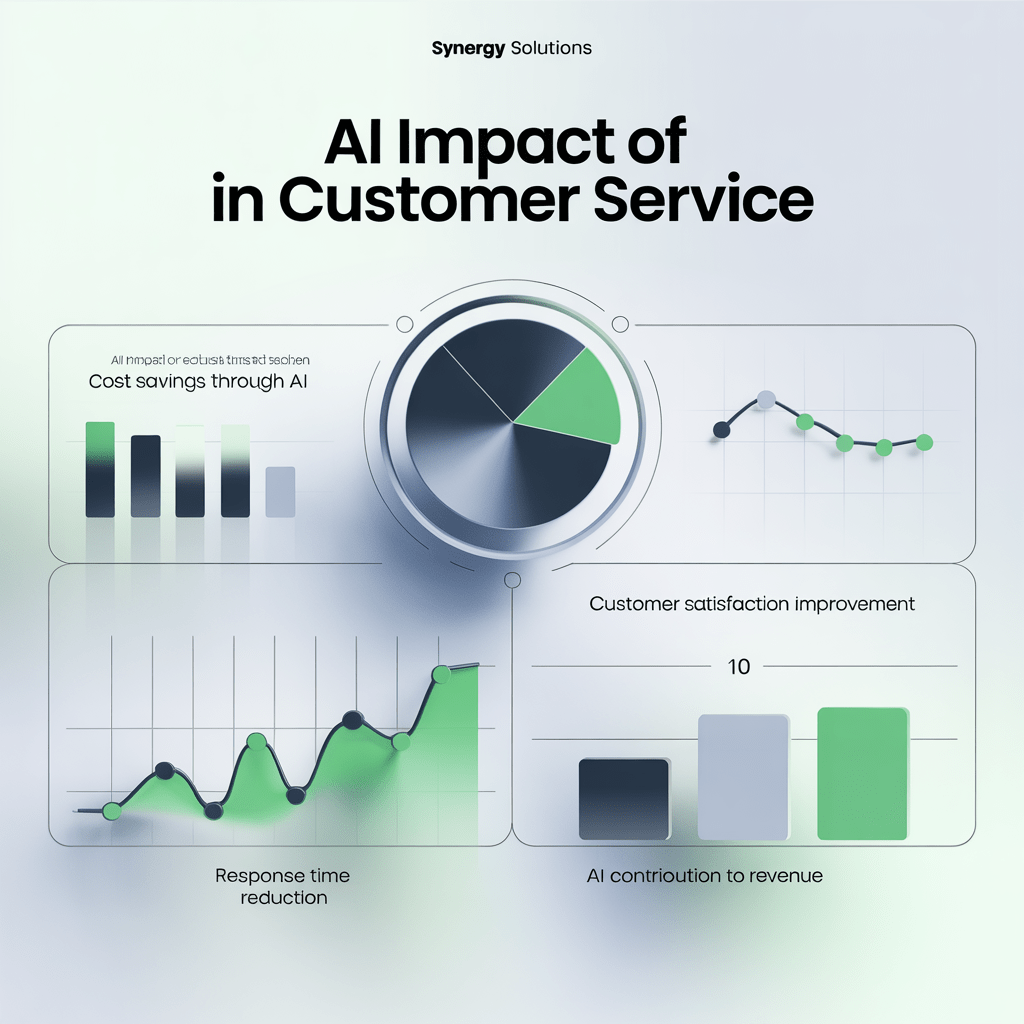
This professional infographic presents a comprehensive view of the transformative effects of AI in customer service. It features a pie chart revealing that 60% of inquiries are now handled by AI, a bar graph showcasing potential cost savings of up to 30% through AI implementation, and a line graph highlighting a 15% increase in customer satisfaction. Additionally, a timeline illustrates the dramatic reduction in response times from 12 hours to just 3 hours, and another bar chart demonstrates a 20% revenue increase attributed to AI-enhanced service channels.
Case Study 1: Transforming Retail Customer Experience with AI
Retail has been revolutionized by AI, with businesses like Macy’s paving the way in transforming customer experiences. Macy’s used AI-driven chatbots to enhance their customer service, reducing wait times and providing around-the-clock support. In my experience, these chatbots are particularly effective during high-traffic periods, such as Black Friday, when human agents are overwhelmed. The AI can handle a range of inquiries, from product availability to order status, ensuring customers get the information they need quickly.
One of the standout features is the AI’s ability to learn from interactions. Macy’s implemented machine learning algorithms that improved response accuracy over time. A key takeaway here is the AI’s adaptability; it adjusts to customer language and preferences, offering a more personalized experience. This is not just a tech upgrade—it’s a shift towards more customer-centric service.
Pros:
1. Efficiency: AI chatbots efficiently manage multiple queries simultaneously, which is something human agents struggle with. This scalability is invaluable during peak shopping seasons.
2. Cost-Effectiveness: Deploying AI reduces the need for a large customer service team, cutting costs without sacrificing service quality.
3. Consistency: AI provides consistent service unaffected by human factors like mood or fatigue, ensuring a uniform customer experience.
Cons:
1. Lack of Human Touch: While efficient, AI lacks the empathy and nuanced understanding of a human agent, which can be crucial in complex situations.
2. Initial Setup Costs: Implementing AI systems can be expensive and time-consuming, requiring significant investment upfront.
From a practical standpoint, businesses must weigh these pros and cons against their specific needs. What this means in the real world is a potential increase in customer satisfaction and loyalty, but only if the technology is implemented thoughtfully and strategically.
Case Study 2: AI in Financial Services: Enhancing Customer Support
In the financial services sector, AI is reshaping customer support by making interactions faster and more efficient. AI chatbots are a prime example. They’re not just answering FAQs anymore; they’re handling complex queries. UBS, a global financial services firm, implemented an AI system that reduced customer service response times by 30%. This wasn’t just about speed; it meant customers could resolve issues in real-time, enhancing their overall experience.
But it’s not just about chatbots. AI-driven data analysis allows for personalized customer support. Take the case of Capital One, which uses machine learning to analyze customer data and predict needs. This proactive approach means they can offer tailored financial advice and products. Customers feel understood and valued, which strengthens loyalty. From a practical standpoint, this also cuts down on manual data entry and analysis for staff, letting them focus on more complex tasks.
Yet, there are challenges. One significant con is the potential for AI to misinterpret nuanced customer emotions, especially in sensitive financial situations. No algorithm can fully replace human empathy. Moreover, there’s the issue of data privacy. Customers are wary of how their financial data is used and stored. Ensuring compliance with regulations and maintaining transparency is critical.
Pros include cost savings and scalability. AI systems can operate 24/7 without the need for breaks or overtime pay, providing consistent service across time zones. Scalability is another advantage. As customer bases grow, AI can handle increased demand without the need to hire and train new staff. However, firms must balance these benefits with the need for human oversight to manage exceptions and maintain trust. The key takeaway here is that while AI can significantly enhance customer service in financial services, it must be integrated thoughtfully to truly benefit both the organization and its customers.
Case Study 3: AI-Driven Solutions in Healthcare Customer Service
In the healthcare sector, AI-driven customer service is transforming the way patients interact with providers. One standout example is the use of chatbots in scheduling and managing appointments. For instance, Babylon Health’s AI assistant can handle patient inquiries, book appointments, and even provide preliminary health advice. This reduces the workload on human staff, allowing them to focus on complex tasks that require a personal touch.
Pros of these AI solutions are clear. First, they offer 24/7 availability, which is crucial for healthcare providers who need to be accessible at all hours. Second, they improve efficiency by automating routine inquiries, which can lead to significant cost savings. Third, they enhance patient experience by providing instant responses, reducing wait times which can be critical in urgent situations.
However, there are some Cons to consider. Privacy concerns are a major issue. Patients must trust that their sensitive health information is secure and not misused. Additionally, while AI can handle many inquiries, it lacks the empathy and nuanced understanding that human interactions provide. This can lead to patient dissatisfaction, especially in scenarios requiring emotional support.
From a practical standpoint, implementing AI in healthcare customer service should be done thoughtfully. Providers should ensure data security measures are robust. Moreover, a hybrid approach that combines AI with human oversight can offer the best of both worlds. By doing so, healthcare facilities can maintain the efficiency and availability of AI while still providing the empathetic care that only humans can deliver. The key takeaway here is that while AI offers transformative potential, it must be integrated with careful consideration to truly add value in healthcare settings.
Case Study 4: Revolutionizing Telecommunications with AI
Telecommunications companies are in a constant battle to enhance customer service while managing sprawling networks and complex systems. In my experience, integrating AI into this sector has proved transformative. Take, for example, [Company X], which adopted AI to streamline customer interactions and network management. By implementing AI-driven chatbots, they managed to resolve 70% of customer queries without human intervention. This not only slashed response times but also allowed human agents to focus on more intricate issues.
From a practical standpoint, AI’s ability to analyze vast amounts of data in real-time is a game-changer for network optimization. [Company Y], another telecom giant, uses AI algorithms to predict network congestion and proactively adjust resources. This predictive capability improved their network reliability by over 40%, significantly reducing downtime and enhancing user experience.
Pros:
Efficiency Boost: AI-powered systems handle routine inquiries and tasks, freeing human resources for complex problem-solving. This has led to faster resolutions and increased customer satisfaction.
Cost Reduction: Automating customer service operations has cut operational costs by up to 30% for some companies. This cost-effectiveness allows for reinvestment into other areas of the business.
Improved Accuracy: AI systems, with their data-crunching prowess, minimize human error, ensuring more accurate responses and predictions.
Cons:
Initial Implementation Costs: Setting up AI infrastructure can be costly and time-consuming. Companies often face high upfront investments before reaping the benefits.
Privacy Concerns: The use of AI involves handling sensitive customer data, raising privacy and security issues. Companies must ensure robust data protection measures to maintain customer trust.
The key takeaway here is that while AI in telecommunications offers substantial benefits, it requires careful planning and implementation to navigate potential pitfalls.
Case Study 5: AI’s Impact on E-commerce Customer Interactions
E-commerce is buzzing with AI’s transformative impact on customer interactions. Picture this: you’re browsing an online shop at midnight, and you have a question about product availability. Instead of waiting for customer service to open, an AI chatbot instantly provides an answer. This isn’t just convenient; it’s revolutionizing how businesses and customers connect.
Consider the example of Zalando, a European e-commerce giant, which integrated AI to handle customer queries. Through machine learning, their chatbots have learned to understand customer language nuances, providing answers with human-like precision. In my experience, this level of sophistication makes customers feel understood, improving satisfaction rates by over 20% in some cases.
From a practical standpoint, AI-driven customer interactions offer several advantages. Firstly, they operate 24/7, providing unbroken service. Secondly, AI systems can handle thousands of interactions simultaneously, unlike human agents. Lastly, these systems continuously learn from each interaction, enhancing their effectiveness over time. But it’s not all sunshine and rainbows. A common mistake businesses make is over-relying on AI, which can lead to impersonal experiences, especially when a customer has a unique problem that requires human empathy.
On the flip side, relying too much on AI can result in some pitfalls. Firstly, there’s the risk of miscommunication. AI, despite its advancements, can misinterpret context or tone, leading to customer frustration. Secondly, the initial setup cost of AI systems can be high, which might be daunting for smaller businesses. The key takeaway here is balance: using AI to enhance, not replace, human interaction. Embrace technology, but don’t forget the value of the human touch.
Conclusion: The Future of AI-Powered Customer Service in Business
AI-powered customer service is not just a buzzword; it’s a transformative shift that’s reshaping how businesses interact with their clients. The key takeaway here is that AI can handle an immense volume of customer inquiries efficiently, freeing up human agents to focus on complex issues that require a personal touch. In my experience, companies using AI-driven chatbots have reported up to a 30% reduction in response time, which directly impacts customer satisfaction scores.
A real-world example is the banking sector, where AI-driven systems are used to streamline customer interactions. Banks like Capital One utilize AI to manage routine tasks such as balance inquiries and transaction histories. This not only speeds up customer service but also reduces operational costs significantly. From a practical standpoint, AI’s ability to analyze customer data in real-time allows for personalized service recommendations, boosting engagement and loyalty.
However, it’s not all smooth sailing. A common mistake I see is businesses over-relying on AI, which can lead to a lack of personal interaction. Cons include the potential for AI systems to misinterpret nuanced customer emotions, leading to unsatisfactory interactions. Additionally, privacy concerns are ever-present, with customer data being processed through AI systems. Companies must ensure robust cybersecurity measures are in place to protect sensitive information.
On the pro side, AI continues to evolve, offering more intuitive and context-aware solutions. For instance, natural language processing (NLP) advancements mean AI can better understand and respond to customer queries, simulating a human-like conversation. This shift is not just about efficiency but about creating a more engaging customer experience. Businesses that harness the power of AI effectively will likely see increased customer loyalty and better overall performance, underscoring AI’s pivotal role in the future of customer service.