
In today’s financial markets, the rapid evolution of technology has transformed the way trading is conducted. Automated trading systems, once a novelty, have become integral to the fabric of modern finance. Artificial intelligence (AI) is now reshaping these systems, promising both incredible potential and significant challenges. With its ability to analyze vast amounts of data and learn from patterns, AI is enhancing the decision-making process, making automated trading systems more sophisticated than ever.
Table of Contents
- Introduction: Understanding the Rise of AI in Automated Trading
- The Evolution of Automated Trading Systems
- Key AI Technologies Transforming Trading
- Benefits of Integrating AI in Trading Systems
- Challenges and Risks of AI-Powered Trading
- Case Studies: Success Stories and Lessons Learned
- Conclusion: The Future of AI in Automated Trading Systems
But what does this mean for traders and investors? On the positive side, AI-driven trading systems offer higher speed and efficiency. They can process and react to market data in real-time, executing trades faster than any human could. Additionally, these systems are known for their consistency and lack of emotional bias. Unlike human traders, AI algorithms are not swayed by fear or greed, making them reliable performers even in volatile markets. Furthermore, the ability of AI to uncover hidden patterns in data provides a competitive edge, allowing traders to identify opportunities that would otherwise go unnoticed.
However, the adoption of AI in trading is not without its drawbacks. One significant concern is the lack of transparency. Many AI systems operate as ‘black boxes’, making it difficult to understand the rationale behind specific trading decisions. This can lead to a lack of trust among investors. Another downside is the over-reliance on technology, which can be risky if systems fail or produce unexpected results. Traders must be cautious and maintain a balance between machine-driven insights and human oversight. As we explore the impact of AI on automated trading systems, these pros and cons highlight the importance of navigating this technological frontier with both optimism and caution.
Introduction: Understanding the Rise of AI in Automated Trading
AI’s infiltration into automated trading isn’t just a trend; it’s a revolution reshaping financial markets. Thanks to advances in machine learning and data analytics, trading systems have evolved beyond simple algorithms. Where once traders relied on basic rule-based systems, they now harness AI for more sophisticated, nuanced decision-making.
Consider this: AI-driven models can process vast amounts of data in real-time—news headlines, social media sentiment, or even weather patterns—and make trading decisions within milliseconds. This capability isn’t just impressive; it’s transformative. These systems can identify patterns and predict market movements with a precision that humans simply can’t match. In 2021, JP Morgan reported that AI models contributed to nearly 60% of their equity trading volume, underscoring the technology’s growing dominance.
The benefits are clear. First, AI’s speed and efficiency reduce human error and emotional trading, which can lead to costly mistakes. Second, it allows for 24/7 trading across global markets, maximizing opportunities. Third, AI’s ability to adapt and learn from new data means it can continuously refine its strategies, staying ahead of the curve.
But there are downsides. One concern is the lack of transparency in how AI models make decisions. Traders might not fully understand the algorithms, leading to trust issues. Another issue is the potential for market instability. Flash crashes, like the one in 2010, can be exacerbated by AI’s rapid-fire trading, causing significant market disruptions. Navigating these challenges requires a careful balance of embracing innovation while safeguarding market integrity.
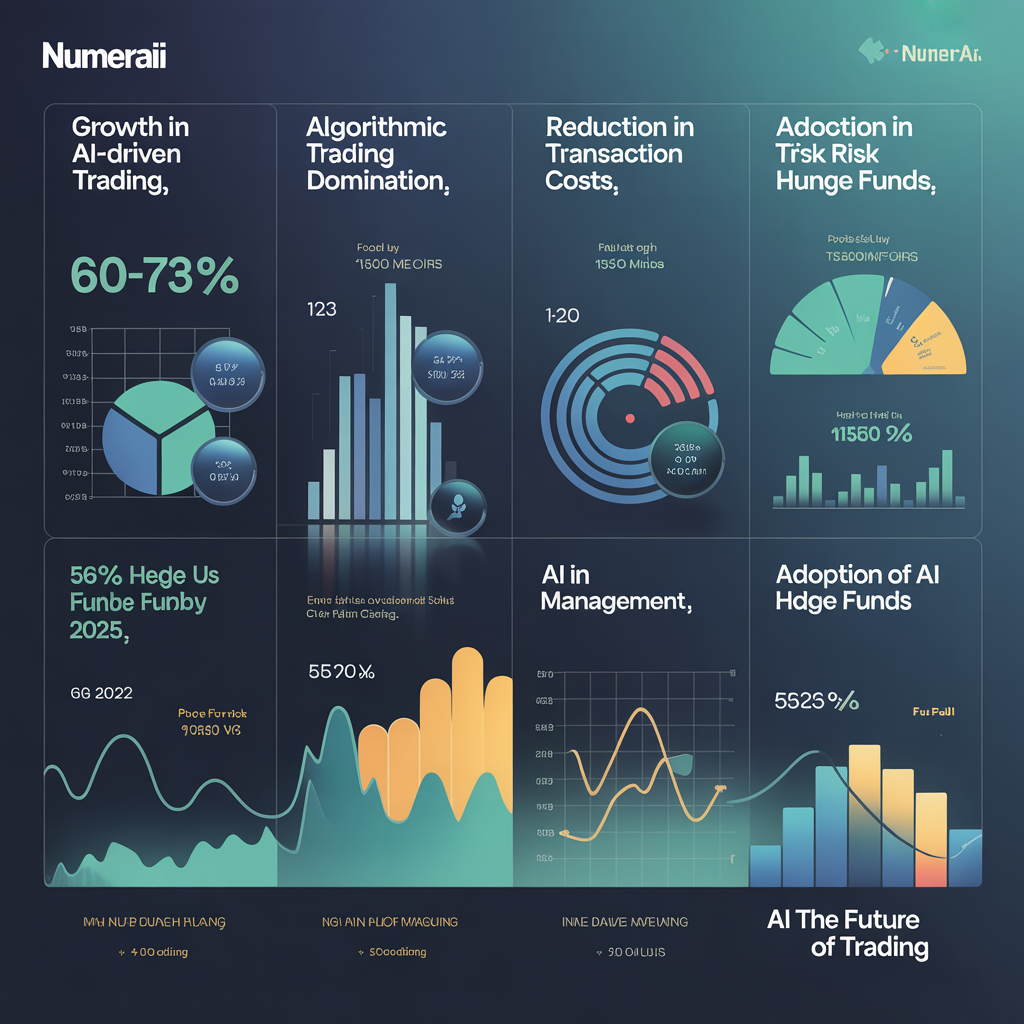
This professional infographic details the transformative role of AI in the trading industry. It covers the significant capital investments, market dominance, cost efficiency improvements, risk management enhancements, and anticipated adoption rates within hedge funds. The visual elements, including graphs and charts, clearly illustrate the statistics and trends sourced from reputable publications like Forbes, Reuters, MIT Sloan Management Review, PwC, and Deloitte, providing a comprehensive overview of the current and projected impact of AI in trading.
The Evolution of Automated Trading Systems
Automated trading systems have transformed significantly over the years, driven by the relentless advance of technology. Initially, these systems operated on basic algorithms, executing trades based on pre-set rules. They were simple, reactive, and often couldn’t keep up with rapid market changes. Back then, even a small delay could mean missing out on profitable trades.
Fast forward to today, AI has drastically altered the landscape of automated trading. These systems now use complex algorithms that can analyze vast amounts of data in real-time, predicting market trends with a level of accuracy that was previously unimaginable. For instance, AI-driven models can process news articles, social media sentiment, and even geopolitical events to make trading decisions. This capability allows traders to act not merely on historical data but on current and predictive analytics.
A prime example of this evolution is the use of machine learning algorithms in high-frequency trading (HFT). These algorithms can execute thousands of trades in milliseconds, capitalizing on small price discrepancies. HFT firms like Citadel Securities and Virtu Financial have harnessed these advancements to gain a competitive edge. However, with great power comes great responsibility. These systems can also amplify market volatility. In my experience, I’ve seen instances where algorithmic trading contributed to flash crashes, leading to significant losses for unwary investors.
From a practical standpoint, while the benefits of AI in trading are clear, there are drawbacks. One major advantage is the ability to remove human emotion from trading decisions, which can often lead to costly mistakes. Additionally, AI systems can operate 24/7, ensuring that opportunities are not missed outside human working hours. On the downside, these systems require significant upfront investment and ongoing maintenance. There’s also the risk of over-reliance on technology, which can be a double-edged sword. If a system fails or is hacked, the consequences can be disastrous. Thus, while AI continues to push the boundaries of what’s possible in automated trading, the real-world implications of these advances must be carefully managed.
Key AI Technologies Transforming Trading
AI’s influence on automated trading is undeniable, largely due to three transformative technologies: machine learning algorithms, natural language processing (NLP), and reinforcement learning. Each of these plays a crucial role in reshaping how trading systems operate.
Machine learning algorithms have the power to process vast amounts of data at speeds inconceivable for human traders. By analyzing historical data, these algorithms can identify patterns and make predictive analytics more accurate. For instance, hedge funds like Renaissance Technologies use machine learning to gain insights from unstructured data, leading to better decision-making. However, it’s important to note that while machine learning can enhance predictive capabilities, it heavily relies on the quality of data input. Poor data can lead to inaccurate predictions, which is a notable risk.
Natural language processing takes it a step further by allowing systems to understand and act upon textual data from news articles, reports, and even social media. In my experience, NLP provides a competitive edge by quickly interpreting market sentiment and identifying relevant news events before they have a widespread impact. For example, when a major company’s earnings report is released, NLP tools can instantly analyze the tone and implications of the report, allowing traders to react faster than ever. But, the challenge lies in accurately interpreting nuances and sarcasm in human language, which can sometimes lead to misjudgments.
Then there’s reinforcement learning, an approach where AI systems learn optimal strategies through trial and error, much like how a human might learn from their environment. This method has been notably implemented in AI models developed by firms like DeepMind, where systems adapt and improve over time based on feedback. The benefit here is the system’s ability to evolve with changing market conditions. However, the downside is that this learning process can be resource-intensive and time-consuming, requiring substantial computational power and time to fine-tune models for effective performance.
In summary, these AI technologies are reshaping trading landscapes by enhancing speed, accuracy, and strategic adaptability. The key takeaway here is that while AI tools offer significant advantages, they also require careful management and a deep understanding of their limitations to fully harness their potential.
Benefits of Integrating AI in Trading Systems
Integrating AI into trading systems offers several compelling benefits, driven by its ability to process vast amounts of data and identify patterns that might elude human traders. Speed and efficiency are the most prominent advantages. AI algorithms can analyze real-time market data and execute trades within milliseconds. This rapid response time can capitalize on fleeting market opportunities, something human traders would struggle to achieve manually. For instance, in high-frequency trading, where even a microsecond delay can result in significant losses, AI’s speed becomes a decisive factor.
Another significant benefit is predictive accuracy. AI models, especially those using machine learning, can predict market trends by recognizing complex patterns in historical data. This capability helps traders anticipate market movements and adjust their strategies accordingly. A report by JPMorgan highlighted that their AI-driven trading systems have improved forecasting accuracy by approximately 30%, leading to better decision-making and increased profitability.
AI also brings a level of emotional detachment to trading that is crucial for minimizing losses. Human traders often fall prey to emotions like fear and greed, which can cloud judgment and lead to impulsive decisions. AI systems, however, execute trades based on data and predefined rules, eliminating the risk of emotional interference. This can be particularly beneficial in volatile markets where maintaining objectivity is challenging.
However, there are some drawbacks. One major concern is the lack of transparency in AI models. Many AI systems function as ‘black boxes’, making it difficult for traders to understand how decisions are made. This opacity can lead to trust issues, especially in scenarios where trades don’t go as planned. Additionally, there’s the risk of over-reliance on technology. Traders might become too dependent on AI, neglecting their skills and intuition. If the system fails or encounters unexpected situations, the lack of manual oversight could result in significant financial losses.
Challenges and Risks of AI-Powered Trading
AI has revolutionized automated trading, but it comes with its own set of challenges and risks that traders need to navigate carefully. Over-reliance on algorithms is a significant concern. When markets behave unpredictably, algorithms that were profitable in the past might not adapt quickly enough. Traders could face unexpected losses if they blindly trust these systems without human oversight. A classic example is the 2010 Flash Crash, where an algorithmic error led to an almost trillion-dollar drop in market value within minutes.
Another issue is data quality and integrity. AI systems rely heavily on vast amounts of data to make decisions. If this data is flawed, biased, or outdated, the trading outcomes can be disastrous. Imagine feeding a machine learning model with incomplete financial data; the predictions will be skewed, leading to poor trading decisions. Traders must ensure their data sources are reliable and regularly updated.
Ethical and regulatory concerns also pose significant risks. AI’s ability to execute trades at lightning speed might give unfair advantages to those who can afford sophisticated systems, leading to an uneven playing field. Moreover, there’s the risk of algorithms engaging in unintended manipulative behavior, which could attract scrutiny from regulatory bodies. In my experience, staying compliant with evolving regulations is crucial to avoid hefty fines and reputational damage.
From a practical standpoint, traders should not only rely on AI but also maintain a level of human involvement to monitor and adjust the systems as needed. Regular audits and stress testing of AI models can help identify potential vulnerabilities before they lead to significant financial losses. The key takeaway here is that while AI can enhance trading efficiency, it’s essential to strike a balance between automation and human oversight to mitigate risks effectively.
Case Studies: Success Stories and Lessons Learned
In the world of automated trading, AI has transformed how decisions are made and executed. Consider the case of Renaissance Technologies, a hedge fund that heavily relies on AI-driven models. Renaissance Technologies’ Medallion Fund is well-known for its consistent returns, often surpassing traditional market strategies. The secret lies in their ability to process massive datasets and identify patterns that even seasoned traders might overlook. By using AI, they can quickly adapt to market changes and optimize trading algorithms in real-time.
Another compelling example is Two Sigma, an investment management firm that embraces AI to explore market inefficiencies. Two Sigma applies machine learning to vast amounts of financial data, enabling them to predict price movements and manage risk effectively. Their approach highlights a key advantage of AI in trading: the capacity to manage complex variables simultaneously, something that human traders struggle with. This has resulted in Two Sigma managing over $60 billion in assets, a testament to AI’s potential in augmenting human decision-making.
However, AI in trading isn’t without its pitfalls. Knight Capital’s infamous 2012 trading glitch serves as a cautionary tale. A software error in their algorithm led to the loss of $440 million in just 45 minutes. The incident underscores the importance of rigorous testing and monitoring of AI systems. It’s a stark reminder that while AI can enhance efficiency, it can also amplify errors if not properly managed.
From a practical standpoint, the key takeaway here is that while AI offers significant benefits—such as speed, accuracy, and the ability to handle large data volumes—it’s crucial to implement robust oversight mechanisms. Ensuring that AI systems have fail-safes and are subject to continuous human oversight can mitigate risks, making AI a powerful ally rather than a liability in automated trading.
Conclusion: The Future of AI in Automated Trading Systems
The future of AI in automated trading systems is both exciting and complex. AI is reshaping how we think about trading, offering speed and precision that humans simply can’t match. Algorithms can analyze vast amounts of data in real-time, identifying patterns and trends that would otherwise go unnoticed. This ability to process information rapidly can lead to more informed decision-making, potentially increasing profitability.
In the real world, hedge funds like Renaissance Technologies have been leveraging AI for years to gain an edge. Their Medallion Fund, which reportedly relies heavily on algorithmic trading, has consistently outperformed traditional funds. The key takeaway here is that AI isn’t just a tool—it’s becoming a central player in the strategy. However, this doesn’t come without pitfalls. AI systems can sometimes overfit to historical data, making them less adaptable to unforeseen market conditions. This was evident during the 2010 Flash Crash when algorithmic trading contributed to a sudden, severe plunge.
On the plus side, AI can help reduce human error and emotional bias, which are often the downfall of even seasoned traders. But a common mistake I see is over-reliance on these systems. Traders may become complacent, assuming the algorithms will handle everything. The reality is that human oversight is still critical. AI can enhance decision-making, but it can’t replace the nuanced understanding that comes from years of experience in the markets.
Looking ahead, the integration of AI with other technologies, like blockchain for secure transactions, presents new opportunities. But there’s a catch: the ethical implications of AI-driven trading are still being debated. Concerns about transparency, fairness, and the potential for market manipulation are valid and need addressing. As AI continues to evolve, the challenge will be balancing innovation with responsibility, ensuring these systems serve not just the markets, but society as a whole.