
In the world of banking, where trust and efficiency are paramount, the infusion of AI is reshaping how institutions connect with their customers. It’s not merely about automating processes or crunching numbers faster; it’s about forging a deeper, more meaningful relationship with clients. Imagine a bank that anticipates your needs before you even voice them, a bank that can guide you with personalized insights tailored to your financial habits. That’s the power of AI in the customer experience.
Table of Contents
- Introduction: The Transformative Power of AI in Banking
- Understanding AI: Key Technologies Driving Change
- Personalized Banking: How AI Tailors Customer Experience
- AI-Driven Efficiency: Streamlining Banking Operations
- Enhancing Security: AI’s Role in Fraud Detection and Prevention
- Challenges and Ethical Considerations of AI in Banking
- Conclusion: The Future of AI in Revolutionizing Customer Experience in Banking
Banks are increasingly utilizing AI to enhance their customer interactions, making them more fluid and personalized. Picture a virtual assistant that not only helps you with routine inquiries but also offers advice on optimizing your savings or managing your investments. These aren’t just future possibilities; they’re happening now, as banks integrate AI-driven tools to provide a seamless, intuitive experience. In my experience, one of the most compelling aspects of AI in banking is its ability to analyze vast amounts of data in real-time. This means customers receive not just generic advice, but specific, actionable insights based on their personal financial landscape.
However, it’s not without its challenges. Privacy concerns loom large, as AI systems require access to personal data to function effectively. There’s also the risk of over-reliance on automated systems, which might lack the nuanced understanding a human advisor can provide. But from a practical standpoint, the benefits often outweigh the drawbacks. Enhanced security measures can mitigate privacy risks, and a blend of AI with human oversight can offer the best of both worlds. This article will explore these dynamics further, weighing the pros and cons, and offering a glimpse into how AI is not just enhancing but transforming the banking experience.
Introduction: The Transformative Power of AI in Banking
Artificial Intelligence is reshaping the banking industry. It’s not just about adding fancy chatbots or automating mundane tasks. AI is fundamentally changing how banks interact with their clients, offering a smoother, more personalized experience.
Consider personalized financial advice. Many banks now use AI to analyze customer data and offer tailored advice. This isn’t just about recommending a savings account. It’s about understanding spending habits and life goals to suggest investments or savings plans that genuinely fit the customer. For instance, some banks use AI to predict when a customer might need a loan based on their spending behavior, helping them avoid unnecessary financial strain.
Another area where AI shines is fraud detection. In the past, catching fraud was often a reactive process. However, AI can now analyze patterns in real-time, flagging suspicious activities before they cause damage. According to a report from the Association of Certified Fraud Examiners, businesses lose an average of 5% of revenue to fraud each year. AI’s proactive approach means banks can significantly reduce this figure, safeguarding both their reputation and their customers’ finances.
But it’s not all smooth sailing. Implementing AI comes with challenges. Data privacy is a major concern. Customers need to trust that their data is secure and not being misused. Another issue is the risk of over-reliance on technology. AI systems can make mistakes, and when they do, the consequences can be severe. Banks must ensure there’s a balance between AI and human oversight to maintain trust and reliability.
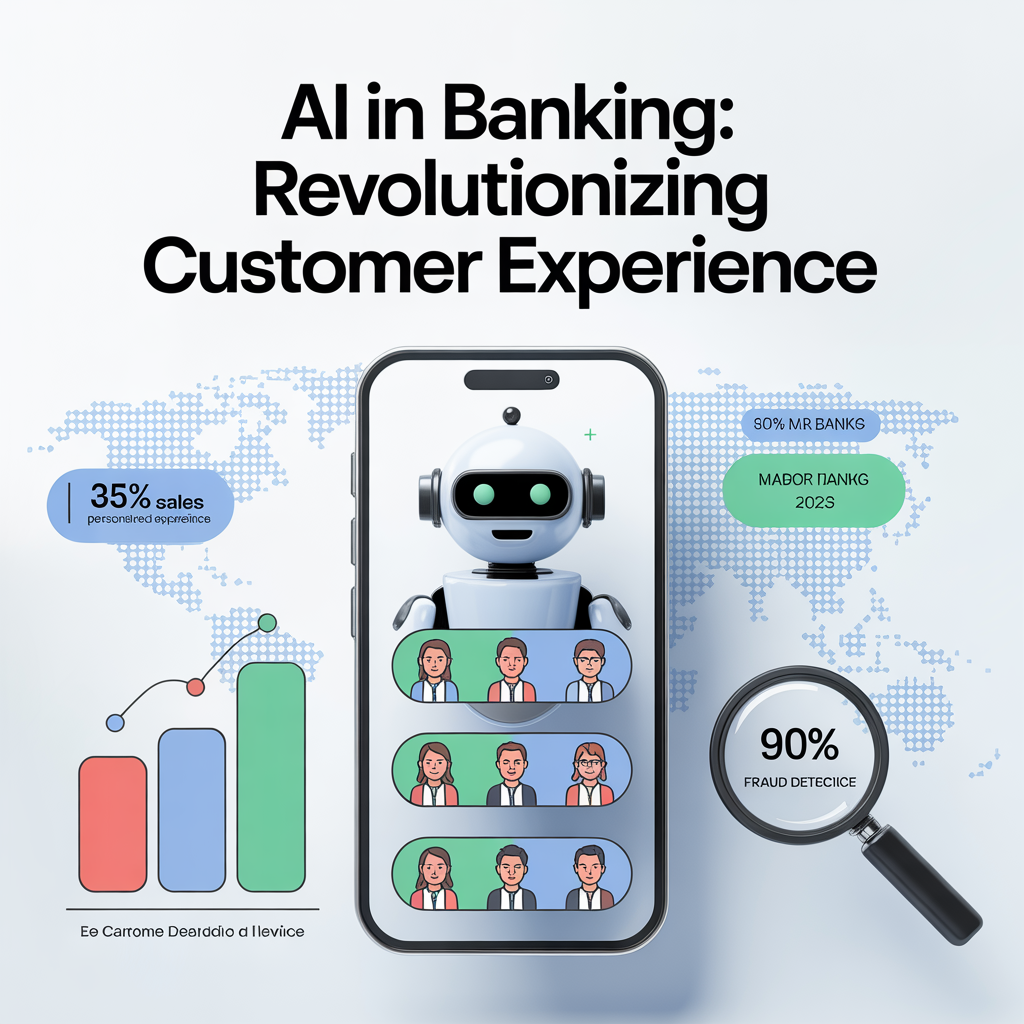
This infographic presents key insights into the transformative role of AI in banking and customer service. Discover how AI-powered chatbots streamline routine interactions, enhancing response times and cutting costs. Learn about the significant sales uplift banks experience by employing AI for personalized customer engagements. Explore the advanced capabilities of AI in fraud detection, dramatically reducing false positives and improving accuracy. See how AI boosts customer satisfaction scores and understand the global trend of banks adopting AI for process automation and enhanced customer experiences by 2023.
Understanding AI: Key Technologies Driving Change
AI isn’t just a buzzword in banking; it’s a tool reshaping how we interact with financial institutions. Machine Learning is at the heart of this transformation. Imagine a bank that knows when you’re likely to need a loan or a personalized savings plan. That’s machine learning in action—using algorithms to analyze customer data, predict behaviors, and offer tailored solutions. In my experience, this leads to more meaningful interactions between banks and their customers. It’s not just about selling a product; it’s about meeting real needs.
Another key player is Natural Language Processing (NLP). Ever chatted with a bank’s chatbot at 2 AM? That’s NLP, enabling machines to understand and respond to human language. A real-world example is how banks use chatbots to handle routine queries, freeing up human staff for complex issues. From a practical standpoint, this means quicker response times and happier customers. But let’s be honest, not all queries can be solved by a bot, and sometimes a human touch is irreplaceable.
Then there’s Robotic Process Automation (RPA). Think of it as the tireless worker behind the scenes, automating repetitive tasks like data entry and transaction processing. This doesn’t just speed things up; it reduces human error, which is crucial in a field where precision matters. A common mistake I see is underestimating the potential of RPA to cut costs and improve efficiency. However, one must be cautious about potential job displacement and ensure a balance between automation and employment.
The key takeaway here is that these technologies collectively enhance the customer experience by making banking more efficient, personal, and available round the clock. Yet, the challenge lies in integrating these technologies in a way that enhances rather than replaces the human element in banking.
Personalized Banking: How AI Tailors Customer Experience
AI is revolutionizing personalized banking by crafting experiences that feel tailor-made for each customer. In my experience, banks are leveraging AI algorithms to analyze customer data and predict individual needs. This isn’t just about tracking spending habits. It’s about understanding life patterns. For instance, if a customer frequently travels, AI can suggest travel-friendly credit cards or alert them about international transaction fees.
From a practical standpoint, one of the most significant shifts is in customer service. AI-driven chatbots, like Bank of America’s Erica, don’t just answer questions. They learn from interactions, offering more precise assistance over time. A common mistake I see is banks underestimating the value of these interactions. When AI can pull up past transactions or predict future financial needs, it turns a simple query into a personalized financial consultation.
The key takeaway here is the balance between technology and human touch. While AI handles routine queries, human advisors focus on complex issues, like investment advice. This synergy doesn’t just enhance efficiency; it elevates customer satisfaction. On the flip side, there are concerns about privacy. Customers worry about how much data is too much. Banks must tread carefully, ensuring transparency about data usage.
Moreover, there’s the risk of over-reliance on AI. If systems falter, it could disrupt services. Real-world examples show that when AI systems fail, like during technical outages, customer trust can erode quickly. Therefore, banks should maintain robust backup systems and ensure human oversight to manage AI’s limitations effectively.
AI-Driven Efficiency: Streamlining Banking Operations
In my experience, AI has become a cornerstone in the evolution of banking operations, significantly enhancing efficiency. At its core, AI automates repetitive tasks that once consumed countless hours of manual effort. A prime example is fraud detection. Banks are now using AI algorithms to monitor transactions in real-time, flagging anomalies that might indicate fraudulent activity. This automation not only accelerates response times but also reduces human error, ultimately protecting both the bank and its customers.
Another area where AI shines is in customer service operations. Chatbots, powered by natural language processing, handle routine inquiries such as balance checks or branch details, freeing human agents for more complex issues. This shift not only cuts costs but also improves customer satisfaction by reducing wait times. A common mistake I see is banks deploying chatbots without adequate training, leading to frustrated customers. Hence, investing in robust AI training is crucial.
AI also plays a pivotal role in risk management. Through predictive analytics, banks can assess creditworthiness more accurately. These systems analyze extensive data sets, from transaction history to market trends, offering insights that humans might overlook. However, it’s important to note that over-reliance on AI can have drawbacks. One notable downside is the potential bias in algorithms if the training data is not diverse. This could lead to unfair credit decisions, which is why it’s essential to continuously audit AI systems.
The key takeaway here is that while AI-driven efficiency transforms banking operations, it requires careful implementation and oversight. Banks must balance automation with a human touch to maintain trust and ensure equitable service delivery. This blend of technology and human insight is what will define the future of banking.
Enhancing Security: AI’s Role in Fraud Detection and Prevention
In the world of banking, security isn’t just a priority—it’s the foundation. AI is reshaping how banks tackle fraud by introducing smarter, faster methods to detect and prevent suspicious activities. Traditionally, fraud detection relied on static rules that often missed new fraud tactics. Now, AI models learn from vast datasets, identifying subtle patterns and anomalies that human analysts might overlook. This means banks can catch fraudulent transactions in real-time and prevent significant financial losses.
One practical example of AI in action is its role in transaction monitoring. Imagine a regular customer who typically makes purchases in New York. Suddenly, there’s an attempt to withdraw cash from an ATM in Tokyo. AI systems, trained to recognize such outliers, flag the transaction instantly. This isn’t just theory—banks using AI have reported up to a 50% reduction in fraud-related losses, according to recent studies.
Pros of AI in fraud detection include its ability to scale, its accuracy in identifying fraud, and its capability to reduce false positives.
- Scalability: AI systems can process millions of transactions per minute without breaking a sweat, something human teams could never match.
- Accuracy: Machine learning models improve over time as they analyze more data, making them highly effective in spotting fraudulent patterns.
- Reduction of false positives: AI can differentiate between legitimate and suspicious activity better than traditional systems, reducing the inconvenience for customers.
However, there are downsides.
- Complexity: Implementing AI requires significant technical expertise and investment. Banks must ensure they have the right infrastructure and talent to support these systems.
- Data privacy concerns: With AI analyzing vast amounts of customer data, ensuring compliance with privacy regulations is crucial. Mishandling data can lead to severe legal repercussions.
In my experience, banks that successfully integrate AI into their fraud detection systems see a marked improvement in both security and customer trust. The key takeaway here is that while AI offers powerful tools for fraud prevention, careful implementation and ongoing oversight are essential to maximize its benefits.
Challenges and Ethical Considerations of AI in Banking
AI is transforming banking, but it comes with its own set of challenges. Data privacy is a massive concern. Banks deal with sensitive personal information, and AI systems need access to vast amounts of this data to function effectively. In my experience, a common mistake banks make is underestimating the importance of robust data security measures. For example, a 2020 report found that 70% of financial institutions experienced some form of cyberattack. The takeaway here is that without stringent data protection protocols, using AI can expose banks to significant risks.
Another challenge is bias in AI algorithms. AI systems learn from historical data, and if this data reflects societal biases, the AI can perpetuate them. In the real world, this can mean biased lending decisions. For instance, if an AI system is trained on data where certain demographics were historically declined loans, it might continue this trend, potentially leading to discrimination claims. The key is ensuring that AI systems are regularly audited for fairness and bias, which, unfortunately, not all banks have the resources or expertise to implement effectively.
Ethical considerations also include the impact on employment. While AI can streamline operations and enhance customer interactions, it can also lead to job displacement. From a practical standpoint, banks must balance AI integration with workforce reskilling to avoid layoffs. This means investing in training programs that help employees transition to roles where human skills are irreplaceable, like customer relationship management.
In summary, while AI offers many advantages to customer experience in banking, it’s crucial to address these challenges head-on. Data privacy, algorithmic bias, and employment impacts are not just technical issues but ethical ones that require ongoing attention and action.
Conclusion: The Future of AI in Revolutionizing Customer Experience in Banking
The integration of AI in banking is not just a fleeting trend but a transformative shift reshaping customer experiences. AI enhances personalized interactions, streamlines operations, and boosts customer satisfaction. Banks using AI can analyze vast amounts of data to tailor services to individual needs. Imagine a scenario where AI-driven chatbots provide instant assistance, reducing wait times and improving service accessibility. These bots don’t just answer questions; they understand context and preferences, offering a human-like touch that many customers now prefer.
Pros of AI in Banking:
1. Personalization at Scale: AI enables banks to offer highly personalized products and services. By analyzing customer data, banks can predict needs and suggest relevant financial products, increasing customer engagement and loyalty.
2. Operational Efficiency: AI automates routine processes like loan approvals and fraud detection, which not only reduces human error but also cuts operational costs. This efficiency allows banks to allocate resources to more strategic initiatives.
3. Enhanced Security: AI algorithms can detect fraudulent activities by recognizing unusual patterns in real-time. This proactive approach not only safeguards customer assets but also enhances trust in digital banking services.
Cons of AI in Banking:
1. Privacy Concerns: Collecting and analyzing customer data raises significant privacy issues. Customers may feel uneasy knowing their data is constantly monitored and evaluated, which can lead to mistrust if not handled transparently.
2. Job Displacement: As AI takes over routine tasks, the need for certain roles diminishes, potentially leading to job losses. Banks must balance technology integration with workforce retraining to mitigate this issue.
In my experience, the key takeaway here is the need for banks to tread carefully—embracing AI’s potential while addressing its challenges. A balanced approach ensures that technology serves as an enabler of better customer experiences rather than a source of discomfort or anxiety. Ultimately, the banks that succeed will be those that innovate responsibly, maintaining a human touch in an increasingly automated world.