
In the world of online banking, personalization isn’t just a nice-to-have—it’s a necessity. Banks are no longer just financial institutions; they’re becoming tech companies in their own right. And AI-driven personalization is at the heart of this transformation. Here’s why: It offers customers more than just a tailored experience; it provides them with a sense of security and understanding. When your banking app knows you well enough to predict your financial needs, it feels like you’re interacting with a personal financial advisor right from your phone.
Table of Contents
- Introduction: The Rise of AI-Driven Personalization in Online Banking
- Understanding AI Personalization: How It Works in Banking
- Key Benefits of AI Personalization for Customers and Banks
- Challenges and Ethical Considerations in AI-Driven Personalization
- Case Studies: Successful Implementations in Online Banking
- Future Trends: The Evolving Role of AI in Personalizing Banking Experiences
- Conclusion: Embracing AI for a Personalized Banking Future
In my experience, the real magic of AI lies in its ability to sift through mountains of data and pick out the nuggets that genuinely matter to each user. This isn’t about showing everyone the same set of features or services. It’s about crafting unique interactions that cater to individual preferences and habits. Imagine logging into your banking app and being greeted with a dashboard that knows you’re saving for a vacation, suggesting the best savings plans, or even offering discounts on airline tickets. That’s not just service; that’s personalization powered by AI.
But while AI-driven personalization in online banking offers significant benefits, it also comes with challenges. We’ll explore both sides in this article. On the upside, personalized banking can lead to improved customer satisfaction, increased loyalty, and higher engagement. Yet, there are concerns about data privacy and the risk of reducing customer autonomy by over-relying on AI predictions. The key takeaway here is finding the balance between personalization and privacy, ensuring technology enhances rather than dictates our financial decisions. Let’s unpack how banks navigate these waters and what it means for the future of our financial experiences.
Introduction: The Rise of AI-Driven Personalization in Online Banking
The landscape of online banking is being reshaped by AI-driven personalization, offering a more tailored experience for users while addressing evolving consumer expectations. Gone are the days when generic services sufficed. Today, banks leverage AI to understand customer behavior, preferences, and financial habits, crafting personalized experiences that enhance user satisfaction and loyalty.
In my experience, one of the most significant shifts has been the transition from static offers to dynamic, data-driven recommendations. For instance, AI algorithms analyze transaction histories to suggest savings plans or investment opportunities that align with a user’s spending patterns. This is not just about convenience; it translates to tangible benefits. A study by Accenture found that 47% of consumers expect their banks to proactively recommend products and services that suit their needs.
But it’s not all about recommendations. AI is also revolutionizing customer service through chatbots. These intelligent assistants handle routine inquiries, freeing up human agents to tackle complex issues. Banks like HSBC have reported a 40% increase in customer satisfaction rates after implementing AI-driven customer service solutions.
However, personalization isn’t without its challenges. Privacy concerns remain a significant hurdle. Consumers worry about how their data is used and stored, with 62% expressing discomfort over banks using AI to track their spending habits. There’s also the risk of over-reliance on technology, where too much automation might erode the human touch that many still value in banking relationships. Balancing these aspects is crucial for banks aiming to harness AI effectively while maintaining trust and human connection.
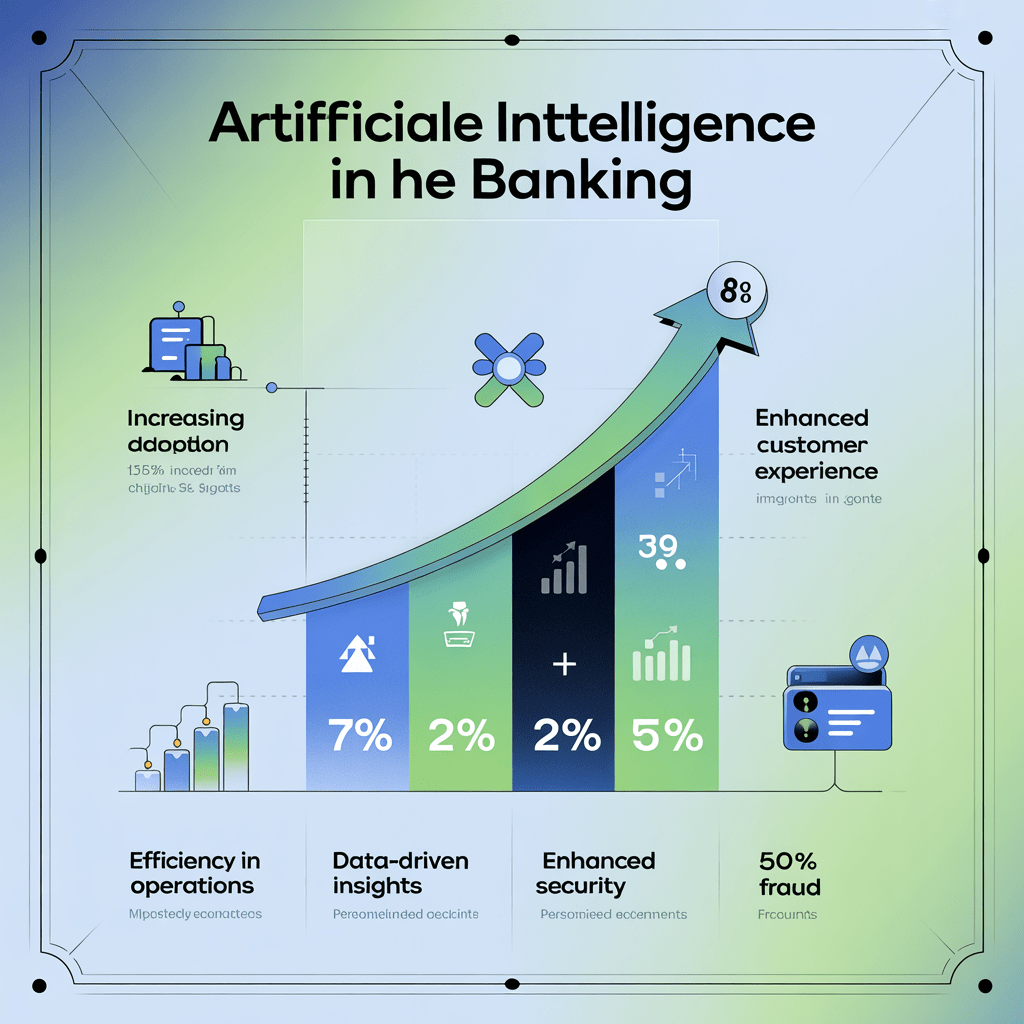
This infographic presents a comprehensive overview of how artificial intelligence is transforming the banking industry. It highlights key areas such as the increasing adoption of AI with 79% of institutions investing, enhanced customer experiences with a boost in digital sales and engagement, operational efficiency through cost reductions, data-driven insights providing personalized recommendations, and improved security with a significant reduction in fraud cases. Designed in a professional style, the infographic uses clear visuals, concise text, and a harmonious color palette to communicate these transformative impacts effectively.
Understanding AI Personalization: How It Works in Banking
AI-driven personalization in online banking is transforming how financial institutions interact with customers. At its core, this personalization is about using data—lots of it—to tailor services and communications to individual preferences and behaviors. AI algorithms sift through vast amounts of customer data, such as transaction history, spending habits, and even social media activity, to predict what a customer might need next. This isn’t just about offering a loan or investment option; it’s about anticipating needs down to the individual level.
Imagine this: a customer frequently travels internationally. An AI system in their banking app might suggest a foreign currency account or offer a credit card with favorable international transaction fees. This isn’t random—it’s tailored based on the customer’s previous activities. For example, Bank of America uses its AI-driven virtual assistant, Erica, to provide personalized insights. Users receive alerts about upcoming bills, spending patterns, or even suggestions to save money based on their financial behavior.
Pros of AI-driven personalization are clear. First, it improves customer satisfaction by making banking more relevant and efficient. Customers feel understood and valued, which can enhance loyalty. Second, it helps banks optimize their resources. By targeting specific needs, banks can allocate their services more effectively. Third, it opens new revenue streams. Offering personalized services can lead to upselling and cross-selling opportunities.
However, there are Cons to consider. Privacy concerns are significant. Customers might worry about how their data is used and stored. Banks must ensure data security and transparency to maintain trust. Another issue is the potential for over-reliance on technology. If the AI system fails or makes an error, it can lead to a breakdown in customer service, emphasizing the need for a human touch in critical interactions.
In my experience, the key takeaway is that while AI personalization offers numerous benefits, banks need to tread carefully. Balancing technological innovation with ethical considerations and customer trust is paramount. It’s not just about what AI can do, but how it does it, ensuring that the personal touch remains at the heart of banking.
Key Benefits of AI Personalization for Customers and Banks
AI-driven personalization in online banking is transforming how customers interact with their financial services. For customers, the benefits are obvious. Personalized insights can help users manage their finances more effectively. Imagine a bank app that analyzes your spending habits, then offers tailored advice on saving. In my experience, this kind of smart nudging can make a real difference in achieving financial goals.
From the banks’ perspective, personalization isn’t just about customer satisfaction—it’s a strategic advantage. Enhanced customer retention is a major perk. When users feel understood and catered to, they’re less likely to switch banks. One study found that personalized services can improve customer retention rates by up to 15%. That’s huge in an industry where customer loyalty is hard to come by.
Then there’s the matter of operational efficiency. AI systems can automate routine tasks such as customer inquiries, freeing up human employees for more complex issues. This not only reduces costs but improves response times. For instance, AI chatbots can handle common questions 24/7, ensuring customers get the help they need without delay.
However, it’s not all sunshine and rainbows. Privacy concerns are a significant downside. Customers often worry about how their data is used. Banks must be transparent and secure to build trust. Additionally, there’s the issue of technological dependency. As banks lean more on AI, they risk becoming vulnerable to tech failures or cyberattacks. It’s crucial for institutions to invest in robust cybersecurity measures to safeguard their systems and customer data. Balancing these pros and cons is essential for banks aiming to integrate AI personalization effectively.
Challenges and Ethical Considerations in AI-Driven Personalization
AI-driven personalization in online banking platforms is reshaping how consumers interact with financial services. Yet, it brings its own set of challenges and ethical concerns that require careful navigation.
One of the main challenges is data privacy. Banks collect vast amounts of personal information to tailor services. While this can enhance user experience, it raises the risk of data breaches. In 2020, over 100 million customer records were compromised at a major bank due to insufficient data protection measures. This incident highlights the need for robust cybersecurity protocols. Banks must encrypt data and ensure compliance with regulations like GDPR to protect sensitive information.
Another significant concern is algorithmic bias. AI systems can unintentionally reflect or even amplify biases present in the training data. In my experience, a common mistake is underestimating how these biases can affect loan approval processes or credit scoring. For instance, if historical data shows a bias against certain demographics, the AI might reinforce these biases, leading to unfair treatment. It’s crucial for banks to regularly audit their algorithms and involve diverse teams in the development process to minimize bias.
Lastly, there’s the issue of transparency. Customers often don’t understand how AI makes decisions about their financial well-being, which can lead to distrust. From a practical standpoint, it’s essential for banks to implement explainable AI models that can provide clear reasons behind each decision. This means offering users insights into why they received a particular loan rate or recommendation, fostering a sense of control and confidence in the system.
The key takeaway here is that while AI-driven personalization holds immense potential, banks must address these challenges head-on. Prioritizing privacy, fairness, and transparency will not only enhance customer trust but also ensure that the benefits of AI are realized ethically and responsibly.
Case Studies: Successful Implementations in Online Banking
AI-driven personalization in online banking has seen some remarkable implementations recently, each demonstrating unique approaches tailored to customer needs. HSBC, for example, has been at the forefront of this technology. By using AI to analyze transaction patterns, they’ve developed a system that anticipates customer needs and offers personalized financial advice. This isn’t just about showing relevant products but proactively preventing issues. If a customer’s spending spikes, the system can suggest budget adjustments before overdrafts occur. In my experience, this proactive approach not only enhances user satisfaction but also strengthens customer loyalty.
Bank of America has taken a different route with their virtual assistant, Erica. Erica uses AI to provide tailored insights into a customer’s financial behavior. It can notify users about unusual account activity, suggest ways to save based on spending habits, and even guide users through complex transactions. A key takeaway here is the blend of AI with human-like interaction, making the banking experience both efficient and personal. From a practical standpoint, this reduces the need for customer service interventions, lowering operational costs.
On the other hand, BBVA in Spain has integrated AI in a way that focuses on enhancing the mobile experience. Their app uses AI to understand user behavior and present personalized offers and products in real-time. This approach isn’t just about selling; it’s about relevance. By learning what the user is likely to need, BBVA increases engagement and conversion rates. However, a common mistake I see is relying too heavily on data without considering user privacy concerns. It’s crucial to balance personalization with transparency and security.
In terms of pros, these systems improve customer engagement by making banking more intuitive and relevant. They also cut down on service costs and increase customer retention. However, the cons include potential privacy issues if data isn’t handled properly, and the risk of alienating users who prefer human interaction over digital solutions. The key is finding the right balance that respects customer preferences while leveraging the full potential of AI.
Future Trends: The Evolving Role of AI in Personalizing Banking Experiences
AI is reshaping the way we interact with online banking, pushing personalization to new heights. In my experience, the most exciting trend is how AI algorithms are tailoring financial advice to individual needs. Consider transactional data: AI can analyze spending patterns and suggest customized budget plans or investment opportunities. For instance, if it notices frequent dining out, it might offer tips to save by cooking at home, or suggest investment options for the saved amount. This isn’t just theory—banks like Capital One are already implementing such features.
Another promising development is AI’s ability to predict user needs before they even arise. From a practical standpoint, algorithms can anticipate when a customer might require a loan based on life events inferred from their financial activities. For example, increased spending at home improvement stores could trigger offers for a home equity line of credit. Banks like HSBC are using predictive analytics to offer timely, relevant services, enhancing customer satisfaction.
Pros of AI-driven personalization include improved customer engagement, as users feel understood and valued. It also boosts financial literacy by providing context-specific advice, helping users make informed decisions. Furthermore, it streamlines service delivery, reducing the need for customer support interventions and enhancing efficiency.
However, there are challenges. Privacy concerns are significant, with users wary of how their data is used. Ensuring robust security measures and transparency about data usage can help mitigate this. There’s also a risk of over-reliance on AI, where users might become passive in managing their finances, trusting algorithms without question. Balancing automation with human oversight is crucial to maintain accountability and trust.
Conclusion: Embracing AI for a Personalized Banking Future
The embrace of AI in personalizing online banking is more than just a trend—it’s a shift towards redefining customer experience. In my experience, banks that integrate AI effectively are not just offering better service; they’re fostering deeper customer loyalty. Consider the example of Capital One’s Eno, a virtual assistant that goes beyond simple queries. Eno analyzes user spending patterns, providing insights and alerts that help customers manage finances more efficiently. This isn’t just about convenience; it’s about enhancing financial literacy and customer empowerment.
From a practical standpoint, AI-driven personalization means tailored financial advice, customized offers, and predictive services. Take Ally Bank, which uses machine learning to analyze transaction data and predict future spending behaviors. This allows them to offer personalized saving tips and alerts that are highly relevant to individual customers. It’s these tailored interactions that can turn a one-time user into a lifelong client.
However, this technology comes with its own set of challenges. One significant concern is data privacy. Banks must balance personalization with the safeguarding of customer information. The implementation of robust data security measures is non-negotiable. Additionally, there’s the risk of over-reliance on AI, which could lead to reduced human oversight and potential errors in judgment. Wells Fargo’s algorithmic trading mishap serves as a cautionary tale—when automated systems misinterpret data, the outcomes can be costly.
The key takeaway here is that while AI holds the potential to revolutionize banking, it’s essential to approach it with a measured strategy. Banks should focus on building trust through transparency, ensuring customers understand how their data is used. By doing so, they can harness AI not just as a tool for efficiency but as a bridge to a more engaging, personalized banking future.