
Customer service is at the heart of any successful business strategy. In today’s competitive market, how you handle customer interactions can make or break your brand. Traditionally, customer service has been a human-centric domain, relying on skilled personnel to address issues, resolve complaints, and foster customer loyalty. However, the rise of artificial intelligence is transforming this landscape, offering solutions that promise efficiency and scalability.
Table of Contents
- Introduction: The Evolution of Customer Service Solutions
- Understanding Traditional Customer Service Models
- Exploring AI-Powered Customer Service Solutions
- Key Differences Between Traditional and AI-Powered Approaches
- Benefits and Challenges of AI in Customer Service
- Case Studies: Success Stories and Lessons Learned
- Conclusion: Choosing the Right Customer Service Solution for Your Business
This article will explore the key differences between traditional and AI-powered customer service solutions. We’ll examine the pros and cons of each approach, providing insights to help you determine which might best suit your business needs. In a world where customer expectations are continually evolving, understanding these options is not just beneficial—it’s essential.
Introduction: The Evolution of Customer Service Solutions
In the early days, customer service was straightforward. If you had a problem, you called a helpline, and a representative guided you to a solution. This personal touch was integral, yet inherently limited by time zones and operating hours. Fast forward to the digital age, and we see a significant shift. Email, live chat, and social media channels have expanded how businesses interact with customers.
AI has further revolutionized this landscape. Chatbots, predictive analytics, and automated help desks are becoming commonplace. These AI tools offer 24/7 availability and can handle inquiries much faster than traditional models. According to a 2022 study by Gartner, businesses that integrate AI in customer service see a 25% increase in efficiency. Yet, it’s not just about speed; AI can analyze data to provide personalized experiences, a key factor in customer satisfaction.
Despite these advancements, the human element remains crucial. AI might handle routine queries efficiently, but complex issues often require a human touch. This balance between technology and empathy defines the modern customer service landscape. Companies must weigh these factors when choosing between traditional or AI-powered solutions.
Understanding Traditional Customer Service Models
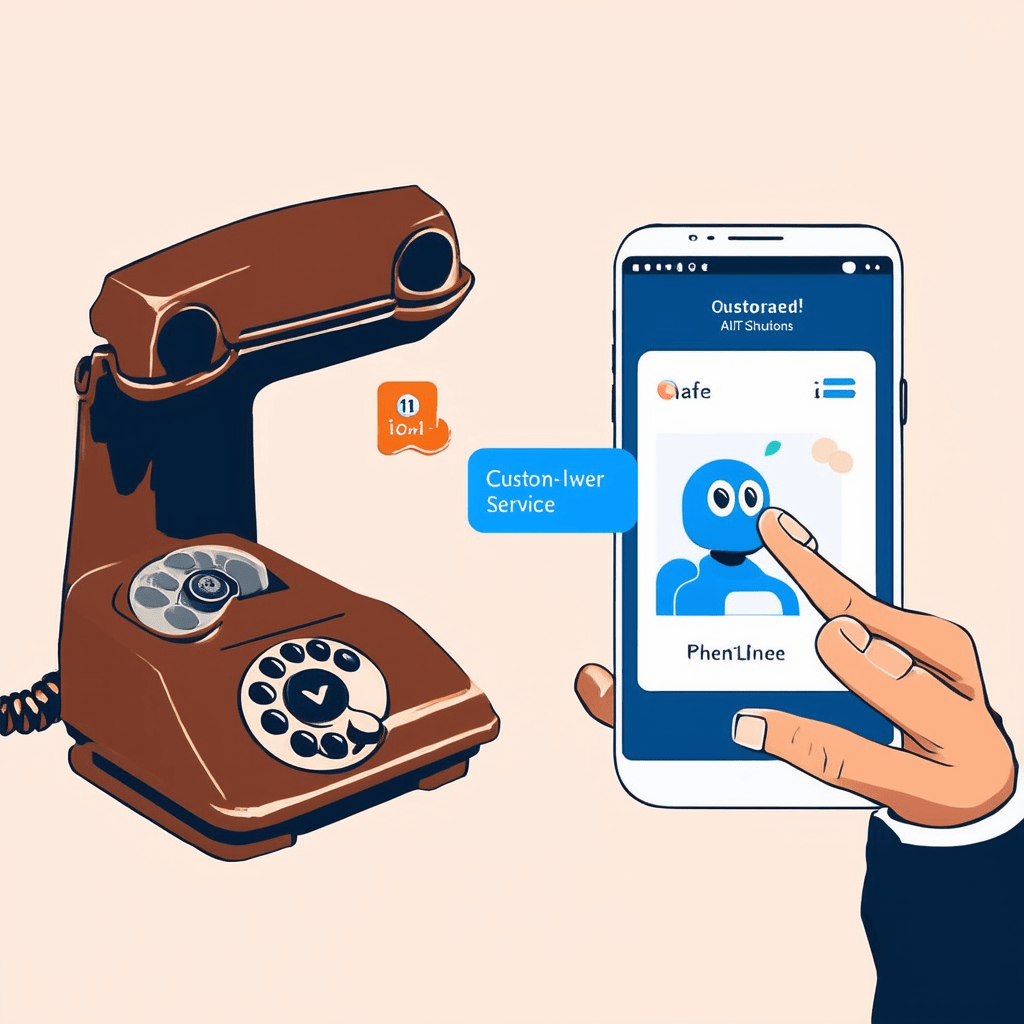
Traditional customer service models are built on human interaction. Whether it’s a phone call, in-person meeting, or even an email conversation, these methods rely on human judgment and empathy. A key advantage is the ability to offer personalized support, as representatives can tailor their responses based on the customer’s tone and context.
However, traditional methods come with limitations. They require a significant investment in training and staffing, which can be costly. Additionally, human agents are bound by work hours, which can delay responses and frustrate customers. In highly competitive environments, this delay can lead to dissatisfaction and a loss of business.
Despite these challenges, traditional models excel in complex scenarios. For instance, when a customer’s issue involves multiple variables, a human agent’s ability to problem-solve and adapt in real-time is invaluable. As such, many businesses still favor traditional methods for handling high-stakes or sensitive interactions.

Exploring AI-Powered Customer Service Solutions
AI-powered customer service introduces a level of efficiency that’s hard to match. With chatbots and automated systems, businesses can provide instant responses to common queries, freeing human agents to tackle more complex issues. According to a McKinsey report, AI integration in customer service can reduce operational costs by up to 30%.
One of the standout features of AI solutions is their ability to learn and adapt. Machine learning algorithms can analyze customer interactions over time, refining responses and improving accuracy. This adaptability means that AI systems can handle a growing range of queries more effectively.
However, AI is not without its challenges. While efficient, AI systems can lack the empathy required in sensitive situations. There’s also the risk of over-reliance, where businesses might miss out on the nuanced understanding that human agents provide. Balancing AI’s efficiency with human insight is crucial for delivering well-rounded customer service.

Key Differences Between Traditional and AI-Powered Approaches
At their core, traditional and AI-powered customer service solutions differ in execution and capability. Traditional models excel in personalization, with human agents able to read emotional cues and adapt their communication style accordingly. This human touch is invaluable in situations requiring empathy and detailed understanding.
On the other hand, AI-powered solutions shine in speed and scalability. They can handle large volumes of inquiries simultaneously and provide quick resolutions to routine questions. This efficiency is especially beneficial for businesses with a global customer base, allowing for 24/7 support without the need for round-the-clock staffing.
The right approach often depends on the business context. Companies dealing with complex, emotionally charged issues might lean towards traditional methods. Conversely, those facing high inquiry volumes with simpler issues might benefit more from AI solutions. The challenge lies in integrating both approaches effectively to harness their respective strengths.
Benefits and Challenges of AI in Customer Service
AI in customer service offers numerous benefits, starting with enhanced efficiency. Automated systems can manage multiple interactions simultaneously, reducing wait times significantly. This immediacy can lead to higher customer satisfaction rates, particularly for straightforward inquiries.
Moreover, AI’s ability to analyze and learn from data allows for increasingly accurate and personalized interactions over time. This adaptability can enhance customer experience, with AI systems predicting customer needs based on past interactions. However, these benefits come with challenges.
AI lacks the emotional intelligence of human agents, which can be a drawback in handling nuanced, sensitive cases. Also, there’s the risk of data privacy concerns, as AI systems require access to personal information to function effectively. Businesses must navigate these challenges carefully, ensuring AI systems are implemented with transparency and robust data protection measures.
Case Studies: Success Stories and Lessons Learned
A notable example of AI success in customer service is that of a major telecommunications company. By integrating chatbots into their customer support, they reduced call wait times by 40% and increased customer satisfaction scores by 15%. The AI handled basic inquiries, allowing human agents to focus on more complex issues.
Another case is a global e-commerce giant that implemented AI for order tracking and FAQs. This move not only streamlined operations but also led to a 20% reduction in operational costs. However, they learned the importance of maintaining a human touch after AI misinterpreted emotionally sensitive customer feedback, resulting in a temporary dip in satisfaction scores.
These case studies demonstrate that while AI can significantly enhance efficiency and cost-effectiveness, a balanced integration with human oversight is crucial. Businesses must remain adaptable, continuously refining their approach based on feedback and performance metrics.
Conclusion: Choosing the Right Customer Service Solution for Your Business
Choosing the right customer service solution is not a one-size-fits-all decision. For businesses where personal interaction and empathy are crucial, traditional methods might be the best fit. These solutions excel in scenarios requiring complex problem-solving and emotional intelligence.
However, if efficiency and scalability are priorities, especially in high-volume environments, AI-powered solutions offer distinct advantages. They can handle a multitude of inquiries simultaneously, provide rapid responses, and analyze customer data for personalized service.
Ultimately, the key is not to choose one over the other but to find a balance that leverages the strengths of both. By integrating AI to handle routine tasks and reserving human agents for more complex interactions, businesses can optimize their customer service for the best possible outcomes.