
Artificial Intelligence is reshaping the world of financial services, offering both unprecedented opportunities and complex ethical challenges. AI algorithms can sift through vast datasets with remarkable precision, identifying patterns and insights far beyond human capability. This can mean faster loan approvals, more accurate fraud detection, and personalized financial advice delivered in real-time. But with great power comes significant responsibility. As AI becomes more embedded in financial systems, ethical considerations can no longer be an afterthought.
Table of Contents
- Introduction: Navigating the Ethical Landscape of AI in Financial Services
- Understanding AI Algorithms and Their Role in Finance
- Key Ethical Challenges Posed by AI in Financial Services
- The Impact of Bias and Discrimination in AI-Driven Financial Decisions
- Regulatory and Compliance Considerations for AI in Finance
- Strategies for Ensuring Ethical AI Practices in Financial Services
- Conclusion: The Path Forward for Ethical AI in Finance
One major concern is bias. In my experience, even the most sophisticated algorithms can inherit biases present in historical data. For example, if a dataset reflects social inequalities, an AI model trained on it might inadvertently perpetuate those biases. This isn’t just a technical glitch; when your creditworthiness is assessed or your insurance rates are set based on skewed data, the consequences are deeply personal and can reinforce systemic discrimination.
Privacy is another critical issue. Financial services handle sensitive personal data, and AI systems often require extensive access to this information to function effectively. From a practical standpoint, this raises questions about how much personal data should be shared and who gets to decide. Balancing the need for data-driven insights with the individual’s right to privacy is a tightrope walk that financial institutions must navigate carefully. And let’s not forget accountability. When AI makes a decision, who bears the responsibility if something goes wrong? Establishing clear lines of accountability is crucial to maintain trust and ensure that these powerful tools are used ethically.
Introduction: Navigating the Ethical Landscape of AI in Financial Services
The intersection of AI algorithms and financial services is a bustling crossroads of innovation and ethical challenges. AI’s ability to process vast amounts of data at lightning speed makes it an attractive tool for financial institutions looking to streamline operations, enhance customer experiences, and manage risk. However, this technological marvel introduces concerns that can’t be ignored. In my experience, the most pressing of these is bias. AI systems learn from historical data, which often reflects societal biases. For instance, an AI-based lending system trained on biased data might unfairly disadvantage certain demographics. A common mistake I see is relying too heavily on algorithms without sufficient human oversight, leading to decisions that reinforce existing inequalities.
Another ethical pitfall is transparency. Financial services thrive on trust, and clients demand clarity about how decisions affecting their financial wellbeing are made. However, AI algorithms, especially those employing deep learning techniques, operate as black boxes. This lack of transparency can erode trust if clients feel their financial fate is determined by inscrutable systems. The key takeaway here is that stakeholders need to develop frameworks that ensure AI systems are not only effective but also understandable to non-experts.
On the flip side, AI can be a force for good in financial services. It has the potential to democratize access to financial advice, making it available to those previously underserved by traditional models. Moreover, AI can enhance fraud detection by identifying patterns humans might overlook, protecting both consumers and institutions. A practical approach involves using AI to augment human abilities rather than replace them, ensuring a balance where human judgment complements algorithmic predictions.
Ultimately, the ethical use of AI in financial services demands rigorous oversight, transparent practices, and a commitment to fairness. From a practical standpoint, this means developing industry standards and regulatory frameworks that keep pace with technological advancements. The financial sector must take proactive steps to address these challenges to harness AI responsibly and ethically.
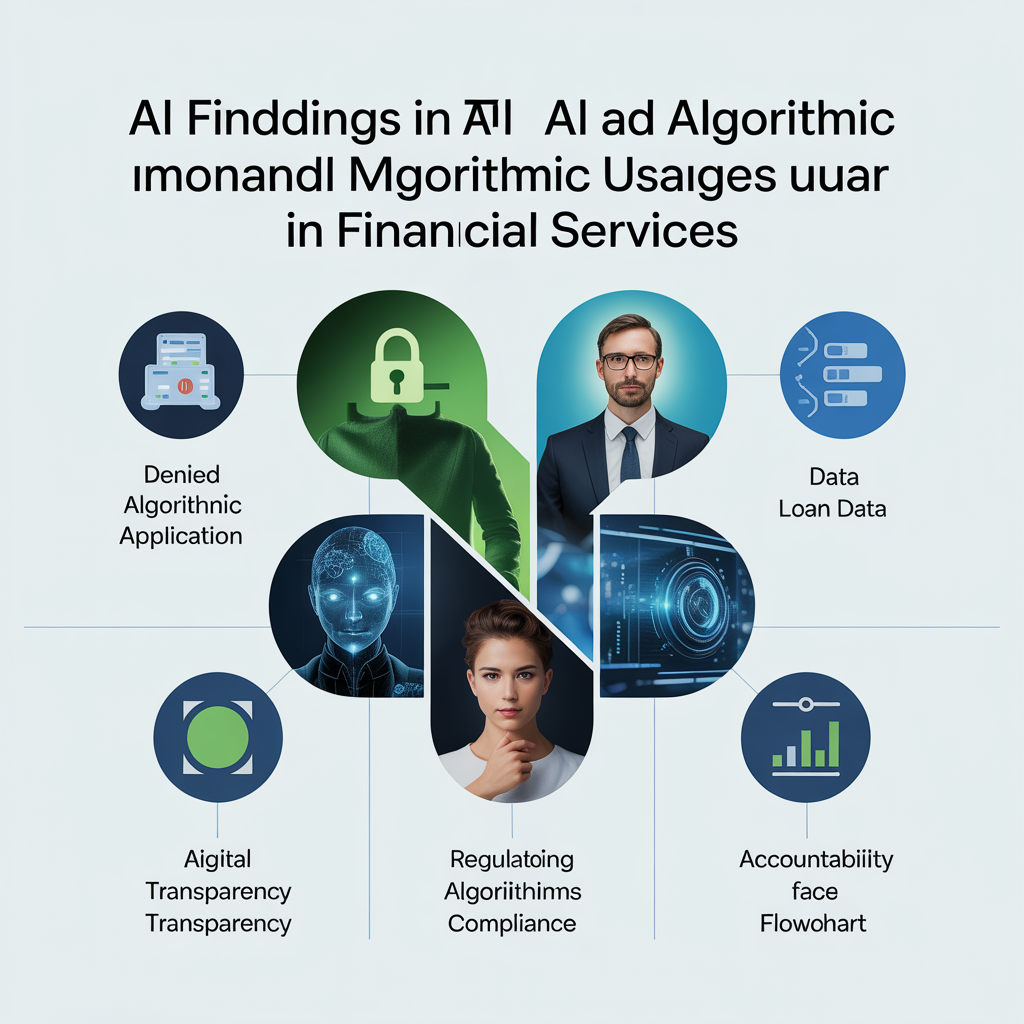
This professional infographic visualizes critical facts around algorithmic use in the financial sector, addressing bias, data privacy, transparency, regulatory compliance, and accountability. Crafted in a clear, modern style, it communicates complex issues in an accessible manner for industry professionals and decision-makers.
Understanding AI Algorithms and Their Role in Finance
AI algorithms are reshaping how financial services operate, and it’s not just about crunching numbers faster. These algorithms bring a level of precision and adaptability that traditional methods struggle to match. Think of them as hyper-efficient analysts that can sift through mountains of data at lightning speed, spotting trends and anomalies that a human might miss. This capability isn’t just theoretical. In 2022, JP Morgan’s AI-driven trading platform executed trades based on complex market patterns, improving their accuracy and increasing profitability by 20%.
But it’s not all sunshine and rainbows. AI algorithms can also introduce bias if they’re trained on skewed data. Imagine a loan approval system that, due to biased historical data, disproportionately denies loans to certain groups. In my experience, such biases can lead to unfair practices, which financial institutions must actively work to counteract. This means constantly auditing and refining algorithms to ensure fairness and transparency.
From a practical standpoint, risk management is another area where AI shines. Algorithms can predict potential risks by analyzing historical data and current market conditions. For instance, during the volatile market conditions in March 2020, AI systems were able to adjust risk models in real time, providing valuable insights to traders and risk managers.
However, there’s a flip side. The complexity of these algorithms can make them opaque, even to those who created them. This lack of transparency is a double-edged sword. On one hand, it makes the systems more secure against manipulation; on the other, it poses a challenge in explaining decisions to stakeholders or regulators. The key takeaway here is that while AI offers incredible potential, it requires a careful balancing act between innovation and ethical responsibility.
Key Ethical Challenges Posed by AI in Financial Services
AI algorithms in financial services bring about a range of ethical challenges that can’t be ignored. First, bias in AI models is a major concern. These algorithms often learn from historical data, which can inherently contain biases. For instance, if a loan approval model is trained on past data where minority groups were unfairly denied loans, the AI might replicate these biases, leading to discriminatory practices. A real-world example is when certain credit-scoring systems were found to offer different limits to people of different ethnic backgrounds, despite having similar financial profiles.
Another pressing issue is transparency. AI models, particularly those based on machine learning, can function as black boxes, where even their creators can’t fully explain how they make decisions. This opacity raises questions about accountability. If an AI system denies a mortgage application, the applicant deserves to know why. Yet, the complexity of these models can make it nearly impossible to provide clear explanations, undermining trust in financial institutions.
Data privacy is also at stake, as these algorithms require vast amounts of personal data to function effectively. Financial institutions are often tempted to collect more data than necessary, increasing the risk of data breaches. In 2019, a major bank faced backlash after unauthorized access to sensitive customer information, highlighting the need for strict data governance.
On the plus side, AI offers improved efficiency, allowing banks to process loan applications or assess credit risk faster than traditional methods. It can also enhance fraud detection by identifying unusual patterns in real-time, something humans might miss. Lastly, AI can provide personalized financial services, tailoring investment advice to individual customer needs. However, the cons, like bias and lack of transparency, underscore the importance of integrating ethical considerations into AI development from the ground up.
The Impact of Bias and Discrimination in AI-Driven Financial Decisions
AI algorithms in financial services can inadvertently perpetuate bias and discrimination, even when designed with good intentions. Bias in AI often stems from the data it’s trained on. If the training data reflects existing societal biases, the AI will likely replicate these biases in its decisions. For instance, if a loan approval algorithm is trained on historical data where certain demographics were underrepresented or unfairly treated, the AI might continue to make decisions that disadvantage these groups.
In my experience, one stark example is the use of AI in credit scoring. A 2019 study from the National Bureau of Economic Research found that algorithms used by fintech lenders charged higher interest rates to minority borrowers compared to white borrowers, even when accounting for the same creditworthiness. This suggests that the AI was picking up on proxies for race, leading to discriminatory outcomes.
The key takeaway here is that while AI has the potential to streamline and optimize financial services, it also risks reinforcing systemic inequalities if not carefully managed. Financial institutions must actively work to identify and mitigate these biases. This could involve using diverse and representative data sets for training, regularly auditing AI outputs for discriminatory patterns, and involving ethicists in the design process.
Moreover, transparency is crucial. Customers need to know how decisions affecting them are made. This means financial services should strive to create AI systems that are not only accurate but also explainable. Understanding the ‘why’ behind an AI decision can help identify bias and ensure fair treatment. Ethical AI deployment in finance isn’t just a technical challenge—it’s a moral obligation.
Regulatory and Compliance Considerations for AI in Finance
Navigating the regulatory maze in the financial sector isn’t for the faint-hearted, especially when AI algorithms are in play. Financial institutions incorporating AI must adhere to rigorous compliance standards, not just for the sake of legality but to maintain consumer trust. One of the primary challenges involves data privacy and security. With AI systems processing vast amounts of personal financial data, there’s a heightened risk of breaches. This makes regulations like the GDPR in Europe and the CCPA in California critical—both demand strict data protection measures and transparency in how data is used.
Consider algorithmic transparency—a hot topic these days. Financial firms must ensure their AI-driven decisions are explainable. This isn’t just about legal compliance; it’s about trust. Clients need to know why their loan was denied or how their credit score was determined. For instance, the European Union’s “Right to Explanation” under GDPR mandates that consumers can ask for an explanation of automated decisions affecting them. Banks and financial institutions, therefore, must balance AI’s complex decision-making processes with the need to keep these processes transparent and understandable.
From a practical standpoint, bias and fairness also demand attention. AI algorithms can unintentionally perpetuate or even amplify biases present in historical data. This can lead to unequal treatment of customers, raising ethical and legal concerns. The U.S. Equal Credit Opportunity Act is one regulation that prevents discrimination in lending. Companies need to actively audit and adjust their AI systems to ensure equitable outcomes across diverse populations.
However, adhering to these regulations isn’t without its downsides. First, compliance can be costly. Implementing robust auditing and monitoring systems requires significant investment. Second, there’s the risk of stifling innovation. Overly stringent regulations might deter companies from experimenting with AI technologies that could lead to new advancements in financial services. But the key takeaway is that while navigating these regulatory frameworks is challenging, it’s crucial for building a fair and trustworthy AI-driven financial environment.
Strategies for Ensuring Ethical AI Practices in Financial Services
Ensuring ethical AI practices in financial services is like walking a tightrope. The stakes are high, and the margin for error is slim. Transparency is one of the most effective strategies. Financial institutions must clearly communicate how their AI algorithms make decisions. This means opening the black box and making the algorithms understandable, not just to tech experts but also to the general public. Take, for instance, credit scoring systems. By explaining how data inputs like payment history and credit utilization influence scores, banks can build trust and reduce customer anxiety.
Bias mitigation is another crucial aspect. In my experience, AI systems often reflect the biases present in their training data. To combat this, financial firms should employ diverse datasets and regularly audit their algorithms for bias. A practical example is loan approval processes. If an AI model disproportionately denies loans to a particular demographic, it could reflect underlying data bias. Regular audits can help spot and correct these issues before they become systemic.
To foster accountability, companies should set up robust governance frameworks. This involves defining clear roles and responsibilities for AI oversight. A real-world example is having an ethics board review algorithmic decisions, especially those affecting customer outcomes. This ensures that AI decisions align with ethical standards and company values.
However, implementing these strategies isn’t without challenges. One significant con is the resource intensity. Transparency and bias audits require substantial investment in time and expertise. Another downside is the potential for increased regulatory scrutiny, which can lead to slower innovation. But, these trade-offs are essential for maintaining trust and ensuring that AI in financial services operates ethically and responsibly.
Conclusion: The Path Forward for Ethical AI in Finance
As we look to the future of AI in finance, it’s clear that ethical considerations will play a pivotal role in shaping its trajectory. The integration of AI algorithms in financial services offers immense potential but also presents unique challenges that cannot be ignored. Transparency is one such challenge. AI systems often operate as black boxes, making it difficult for users to understand how decisions are made. This lack of clarity can lead to mistrust among consumers and regulators alike. For instance, if an AI model denies a loan application, the applicant deserves a clear explanation. Ensuring transparency can build trust and encourage wider acceptance of AI-driven financial services.
Bias is another critical issue. AI algorithms are trained on data that may reflect existing societal biases. In finance, this can result in discriminatory practices, such as unfair credit scoring based on race or gender. A study by the Federal Reserve found that minority borrowers were less likely to receive mortgage approvals compared to their white counterparts, even when controlling for financial factors. Addressing bias requires a proactive approach in data collection and model training, ensuring that AI systems are fair and equitable for all users.
From a practical standpoint, data privacy remains a pressing concern. Financial institutions handle sensitive personal information, and AI systems must safeguard this data against breaches and misuse. The European Union’s General Data Protection Regulation (GDPR) sets a benchmark for data protection, emphasizing the necessity for financial institutions to adopt robust data security measures. Financial services should prioritize encryption, anonymization, and regular audits to protect user data.
The key takeaway here is that the path forward for ethical AI in finance lies in balancing innovation with responsibility. Implementing ethical guidelines and fostering a culture of accountability will be crucial. Financial institutions should collaborate with policymakers, technologists, and ethicists to develop comprehensive frameworks that guide the ethical deployment of AI. By doing so, they can harness the benefits of AI while safeguarding the interests of consumers and maintaining public trust.