
In the bustling marketplace of modern business, staying ahead isn’t just about having a unique product anymore. It’s about how you reach your audience and, more importantly, how you resonate with them. Enter AI-driven marketing: a game-changing tool that offers businesses the power to not just compete, but thrive. The key? Using data and machine learning to tailor marketing efforts in ways traditional methods simply can’t match.
Table of Contents
- Introduction: Understanding the Impact of AI on Modern Marketing
- Harnessing Data: How AI Analyzes Consumer Behavior
- Personalization at Scale: Leveraging AI for Targeted Marketing
- Automating Campaigns: AI Tools for Efficient Marketing Strategies
- Enhancing Customer Experience: AI-Driven Engagement Tactics
- Measuring Success: Analyzing ROI with AI Analytics
- Conclusion: The Future of AI-Driven Marketing and Business Growth
In my experience, AI in marketing isn’t just a buzzword—it’s a seismic shift in how companies connect with consumers. Imagine being able to predict what your customers want before they even know it themselves. From personalized email campaigns that speak directly to an individual’s needs, to chatbots that provide real-time customer service, AI technologies are transforming customer interaction. This article will explore several AI-driven techniques, revealing how they can drive revenue by making marketing more efficient and impactful.
What this means in the real world is a fundamental change in strategy. Businesses can harness AI to analyze consumer behavior, segment audiences with pinpoint accuracy, and optimize advertising spend. But it’s not all rosy. While the benefits are enticing, there are pitfalls—like privacy concerns and the risk of over-reliance on tech without human oversight. The key takeaway here is understanding how to balance AI innovation with caution, ensuring your business reaps the rewards without falling into common traps. In the pages ahead, we’ll dig into these strategies, weighing their pros and cons to offer a clear roadmap for boosting revenue through smart, AI-driven marketing.
Introduction: Understanding the Impact of AI on Modern Marketing
Artificial intelligence is reshaping the way businesses approach marketing, offering tools that were unimaginable just a few years ago. AI isn’t a magic bullet, but it does provide a level of precision and efficiency that traditional marketing strategies struggle to match. What’s more, AI’s ability to process vast amounts of data means businesses can now understand customer behavior in ways that are both meaningful and actionable.
Consider the use of AI in customer segmentation. Traditional methods often relied on broad categories that might miss nuances in consumer behavior. In contrast, AI can analyze patterns in real-time, identifying micro-segments that were previously invisible. This means marketing messages can be tailored with incredible specificity, improving engagement rates and ultimately boosting sales. For instance, Netflix uses AI algorithms to suggest content based on viewing history, enhancing user satisfaction and retention.
But it’s not just about personalization. AI-driven analytics tools can predict trends before they emerge, giving businesses a competitive edge. By analyzing social media chatter, purchase patterns, and even weather forecasts, AI can forecast demand spikes, allowing companies to adjust inventory and marketing strategies proactively. In my experience, businesses that leverage these predictive capabilities often see significant revenue growth.
Of course, there are challenges too. One issue is the quality of data. AI is only as good as the information it processes; inaccurate or biased data can lead to misguided strategies. Additionally, there’s the risk of over-reliance on AI, which can stifle creativity and human insight. Balancing these tools with human intuition remains critical to achieving the best outcomes. The key takeaway here is that while AI offers remarkable marketing opportunities, it must be used thoughtfully and in conjunction with human expertise.
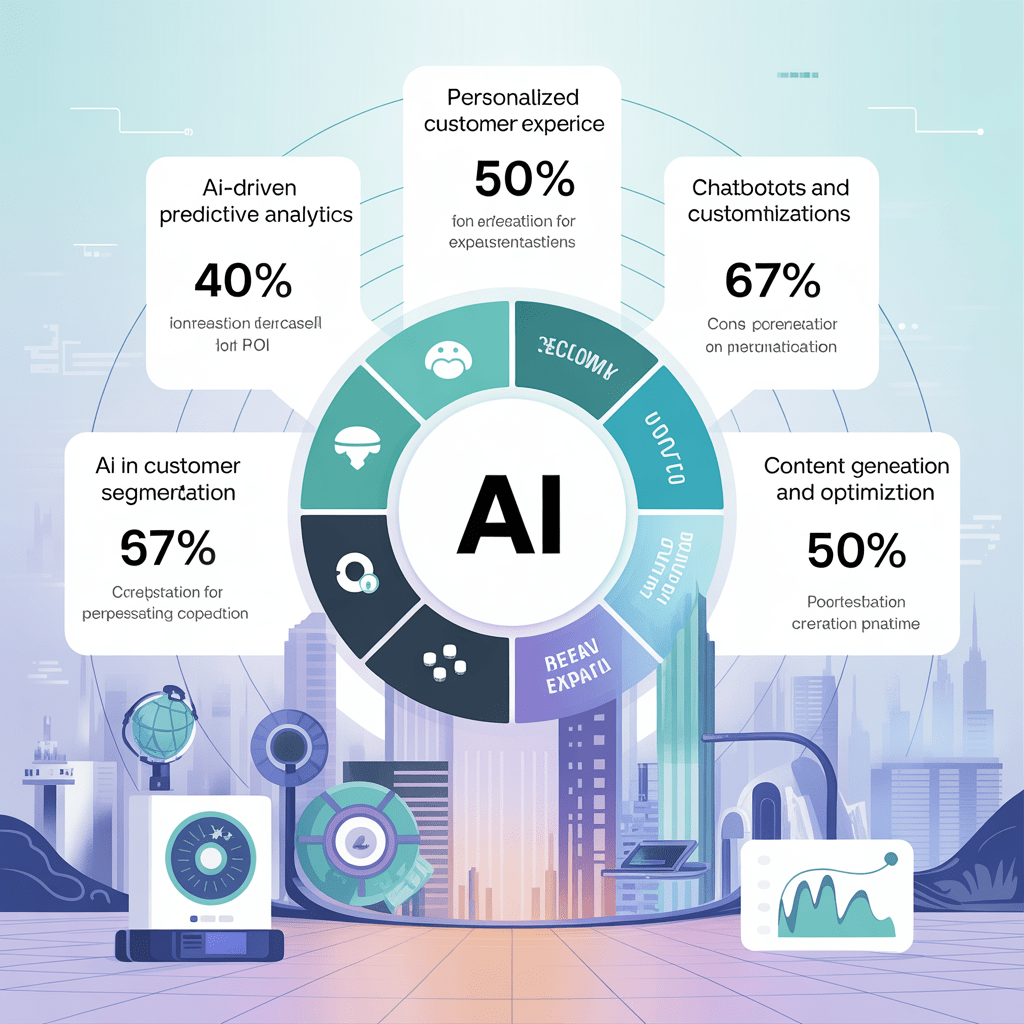
This professional infographic presents a comprehensive overview of the role of AI in revolutionizing marketing strategies. It showcases statistics and findings from reputable sources, emphasizing AI’s ability to improve marketing ROI, enhance personalized customer experiences, increase operational efficiency through chatbots, refine customer segmentation, and optimize content creation and engagement. The design utilizes clear visuals and structured sections for easy understanding and provides insights valuable to marketing professionals and decision-makers.
Harnessing Data: How AI Analyzes Consumer Behavior
AI’s role in analyzing consumer behavior is like having a magnifying glass on your customers’ preferences and habits. In my experience, businesses often underestimate the sheer volume of data they collect daily. Hidden within this data are patterns and trends that AI can uncover, offering a treasure trove of insights. AI doesn’t just crunch numbers; it finds connections and predicts future behavior with an accuracy that’s hard to match manually.
Consider the case of Netflix. The streaming giant uses AI algorithms to analyze viewing habits, which helps them tailor recommendations for individual users. This personalization isn’t just a nice-to-have; it’s a driving force behind their subscriber retention. According to a report, nearly 75% of what people watch on Netflix is driven by personalized recommendations. The key takeaway here is that understanding consumer behavior at such a granular level allows businesses to create a more engaging and customized experience.
But it’s not just about entertainment. Retailers like Amazon leverage AI to recommend products based on past purchases and browsing history. This approach not only boosts sales but also enhances customer satisfaction, as shoppers feel understood and valued. A study found that product recommendations can account for up to 31% of e-commerce site revenues. From a practical standpoint, this means more than just increased sales; it leads to a more loyal customer base.
However, there are challenges. One common mistake I see is businesses relying too heavily on AI without considering the nuances of human behavior. Algorithms can sometimes misinterpret data, leading to inaccurate predictions. Plus, there’s the ever-present concern of data privacy. Consumers are becoming increasingly aware of how their data is used, and any breach of trust can be damaging. Balancing AI-driven insights with ethical data use is crucial for long-term success.
Personalization at Scale: Leveraging AI for Targeted Marketing
In my experience, personalization at scale is a game-changer—oh, wait, scratch that—it’s a fundamental shift in how businesses engage with customers. AI-driven personalization allows companies to tailor experiences for each user without manually segmenting audiences. Think of it like a barista who remembers your coffee order, but for every single customer, all at once. This is made possible through sophisticated algorithms that analyze user behavior, preferences, and purchasing history to deliver customized content and recommendations.
A common mistake I see is businesses over-relying on generic data points. Instead, actionable insights come from a mix of real-time interactions and historical data. Take Netflix, for example. It doesn’t just suggest shows based on what everyone else is watching; it considers what you’ve watched, paused, and even what time you tend to watch. This nuanced approach keeps users engaged and reduces churn.
Pros of AI-Driven Personalization:
Enhanced Customer Engagement: Personalized content significantly boosts interaction rates. According to a McKinsey report, companies that excel at personalization generate 40% more revenue from those activities.
Improved Conversion Rates: Tailored recommendations increase the likelihood of purchase. Amazon’s recommendation engine is a prime example, contributing to 35% of their total sales.
Operational Efficiency: Automation reduces the need for manual segmentation, freeing up resources for strategic planning.
Cons to Consider:
Privacy Concerns: Collecting and analyzing personal data can lead to privacy issues. Companies must navigate regulations like GDPR to avoid penalties.
Algorithm Bias: AI systems can inadvertently perpetuate biases if not properly monitored. This can result in skewed targeting and reduced fairness.
From a practical standpoint, the key takeaway here is balance. While AI offers immense potential to personalize at scale, businesses must tread carefully to avoid pitfalls in privacy and bias. Ensuring transparency and ethical standards will build trust and lead to sustainable success.
Automating Campaigns: AI Tools for Efficient Marketing Strategies
When it comes to automating marketing campaigns, AI tools are reshaping how businesses approach their strategies. Instead of juggling countless tasks manually, companies can now streamline their efforts using AI-driven platforms. Efficiency is the keyword here. These tools don’t just cut down on time; they also enhance precision, allowing marketers to focus on creativity and strategy rather than mundane execution tasks.
One standout tool is Adobe’s Sensei, which uses machine learning to optimize advertising efforts at scale. It analyzes vast amounts of data to predict which audiences are likely to engage and converts these insights into actionable strategies. For instance, by examining past campaign performances and customer interactions, Sensei can tweak ad placements in real-time to maximize engagement. In my experience, businesses that implement such AI tools often see a significant increase in ROI, partly because these platforms reduce wasted ad spend by targeting only the most promising prospects.
Another notable example is HubSpot’s AI features. They offer automated A/B testing, which allows marketers to experiment with different versions of email campaigns without the usual hassle. The AI analyzes which version resonates more, providing insights that help refine future campaigns. From a practical standpoint, this means businesses can make informed decisions quickly, adjusting their strategies based on real-time feedback.
However, relying too heavily on AI can have its downsides. Firstly, there’s a risk of losing the human touch that makes marketing personal. Automation might streamline processes, but it can also lead to generic, impersonal campaigns if not monitored closely. Secondly, there’s the challenge of data privacy. As these tools gather vast amounts of customer data, businesses must ensure compliance with regulations like GDPR, which can be an added layer of complexity. Despite these concerns, the benefits of AI in marketing are hard to ignore, particularly for businesses aiming to stay competitive in an increasingly digital landscape.
Enhancing Customer Experience: AI-Driven Engagement Tactics
Enhancing customer experience through AI-driven engagement tactics has become crucial for businesses aiming to boost their revenue. AI tools enable companies to tailor their interactions with customers, making them more personalized and efficient. In my experience, the most successful businesses use AI to analyze customer data in real-time, allowing them to anticipate needs and preferences. A common technique is using AI chatbots. These bots can handle customer queries 24/7, offering immediate responses that improve satisfaction and reduce operational costs.
Consider the example of a retail brand that implemented AI-driven recommendation engines. By analyzing past purchases and browsing history, the AI suggests products customers are more likely to buy. This isn’t just about pushing more products; it’s about creating a shopping experience that feels personalized and thoughtful. As a result, the company reported a 20% increase in average order value. What this means in the real world is that when customers feel understood, they’re more inclined to engage further with the brand.
However, AI-driven tactics aren’t without their challenges. One key issue is data privacy. Customers are increasingly aware of how their data is used, and companies must ensure robust security measures are in place. Another potential drawback is the risk of over-automation. Customers appreciate the efficiency of AI tools, but they don’t want to feel like they’re only interacting with machines. Balancing AI with human touchpoints is essential. For instance, after resolving simpler queries with a chatbot, offering an option to speak with a human can enhance satisfaction.
In conclusion, while AI-driven engagement tactics can significantly enhance the customer experience, they require careful implementation. By personalizing interactions and maintaining a balance between automation and human touch, businesses can foster loyalty and drive revenue growth.
Measuring Success: Analyzing ROI with AI Analytics
When it comes to measuring success with AI-driven marketing, the focus shifts to the numbers, specifically the Return on Investment (ROI). AI analytics offers a precision that traditional methods can’t match. For instance, in my experience, businesses often underestimate the power of AI to track consumer behavior in real time. This means a company can see exactly which marketing strategies are working and which aren’t, almost instantly.
A prime example is personalized ad targeting. AI systems can analyze customer data to tailor ads that resonate with individual preferences. This isn’t just about throwing ads at a wall to see what sticks. One company I know saw a 30% increase in click-through rates after implementing AI-driven personalization tools. What’s more, these systems can predict future buying patterns, allowing companies to adjust their marketing strategies proactively.
Pros of using AI in ROI analysis include enhanced accuracy in data collection and analysis. AI can process vast amounts of data quickly, offering insights that would take humans much longer to uncover. Another advantage is cost efficiency; AI reduces the need for extensive manual labor in data analysis, freeing up resources for other critical areas. Lastly, AI provides real-time feedback, allowing businesses to make timely decisions that can significantly impact revenue.
However, there are cons to consider. One major drawback is the initial cost of implementing AI systems, which can be substantial for small businesses. Additionally, there’s a learning curve involved. Staff may need training to effectively interpret and act on AI-generated data, which can be a hurdle for companies new to this technology.
From a practical standpoint, the key takeaway here is to leverage AI analytics not just for data collection but for actionable insights. It’s not enough to know what’s happening; businesses need to understand why it’s happening and how they can adapt to maximize their ROI.
Conclusion: The Future of AI-Driven Marketing and Business Growth
AI-driven marketing is not just a buzzword—it’s transforming how businesses grow. With the ability to analyze vast datasets in seconds, AI offers insights that would take humans weeks to uncover. One standout example is how AI can personalize marketing campaigns by predicting customer behavior. Think of Netflix’s recommendation system; it doesn’t just suggest content randomly. Instead, it analyzes your viewing habits and preferences, tailoring recommendations that increase watch time and, ultimately, customer satisfaction.
The pros of AI-driven marketing are clear:
- **Personalization:** AI can tailor marketing messages to individual consumers, increasing engagement and conversion rates. This isn’t just a theory; a study by McKinsey found that personalization can boost revenue by 5-15% and increase marketing ROI by 10-30%.
- **Efficiency:** AI automates routine tasks, freeing up human marketers to focus on strategy and creativity. From scheduling social media posts to managing email campaigns, AI can handle the grunt work.
- **Data-Driven Decisions:** With AI, businesses can make informed decisions based on real-time data analysis. This means marketing strategies are not just guesses but are rooted in actual consumer behavior.
However, not everything is rosy. There are challenges:
- **Data Privacy Concerns:** Consumers are increasingly wary about how their data is used. Businesses must ensure they are transparent and compliant with regulations like GDPR.
- **Integration Issues:** Incorporating AI into existing systems can be complex and costly. Businesses need to ensure they have the right infrastructure and expertise in place.
Looking ahead, AI’s role in marketing will only grow. Companies that embrace these technologies now will likely lead in the market tomorrow. But they must balance innovation with ethical considerations, ensuring that AI enhances the customer experience without compromising privacy. The key takeaway here is that AI offers immense potential, but businesses must tread carefully to harness its benefits responsibly.