
Artificial intelligence isn’t just a buzzword anymore; it’s woven into the fabric of our daily lives, shaping everything from how we work to how we interact with the world. Yet, as AI technology advances, it brings with it a bundle of ethical dilemmas that demand our attention. The real challenge is ensuring that AI develops responsibly while balancing innovation with the moral imperatives of our society. This article seeks to tackle these tough questions, offering a clear-eyed view of the current landscape and what might lie ahead.
Table of Contents
- Introduction: Understanding the Importance of AI Ethics
- The Foundations of AI Ethics: Key Principles and Concepts
- Current Ethical Challenges in AI Development and Deployment
- Case Studies: Real-World Impacts of AI Ethics
- Future Predictions: How AI Ethics Will Shape Technology
- Balancing Innovation and Ethics: Strategies for Responsible AI Development
- Conclusion: The Path Forward for AI Ethics and Society
In my experience, many people underestimate the depth of AI’s impact. It’s not just about clever algorithms or faster data processing. AI is rewriting the rules of privacy, employment, and even creativity. The ethical considerations are vast—privacy concerns, bias in algorithms, and the potential for AI to make decisions without human oversight. These aren’t just theoretical problems. They’re happening now, and how we address them will shape the future of AI development.
This guide will walk you through the ethical challenges and future predictions of AI. We’ll discuss some of the key ethical issues, like how to manage AI’s decision-making power responsibly and the implications for jobs and economies. We’ll also explore the future predictions, focusing on both the potential benefits and the possible pitfalls of AI’s evolution. By the end, you’ll have a comprehensive understanding of AI’s ethical landscape and what we might expect in the coming years. This isn’t just important for tech enthusiasts—it’s crucial for anyone who wants to be part of the conversation about our digital future.**
Introduction: Understanding the Importance of AI Ethics
In my experience, AI ethics isn’t just a buzzword; it’s a crucial element that can make or break technological advances. As AI systems become more integrated into our daily lives, their influence on everything from job markets to privacy rights only intensifies. The key takeaway here is that without a robust ethical framework, AI could lead to unintended harm. For instance, biased algorithms in hiring processes can perpetuate systemic discrimination, undermining efforts to create a fair society.
A common mistake I see is overlooking the nuances of AI ethics. It’s not merely about avoiding harm; it’s about fostering trust and accountability. Take autonomous vehicles, for example. Their potential to reduce accidents is immense, but without ethical guidelines, issues like liability in accidents or decision-making in life-threatening scenarios remain unresolved. These ethical questions aren’t just theoretical—they have real-world implications that could shape public perception and policy.
From a practical standpoint, embedding ethical considerations during the AI development phase can prevent many pitfalls. For example, incorporating diverse data sets during training can mitigate biases. Similarly, transparent algorithms that allow for human oversight can enhance trust. The tech industry has a responsibility to prioritize these practices, ensuring AI benefits are equitably distributed.
However, it’s not all straightforward. One challenge is striking a balance between innovation and regulation. Too many rules can stifle creativity, while too few can lead to chaos. Moreover, ethical standards can vary across cultures, complicating global AI deployment. Despite these hurdles, the emphasis on ethics remains non-negotiable. As we advance, it’s crucial that AI serves humanity, not the other way around.
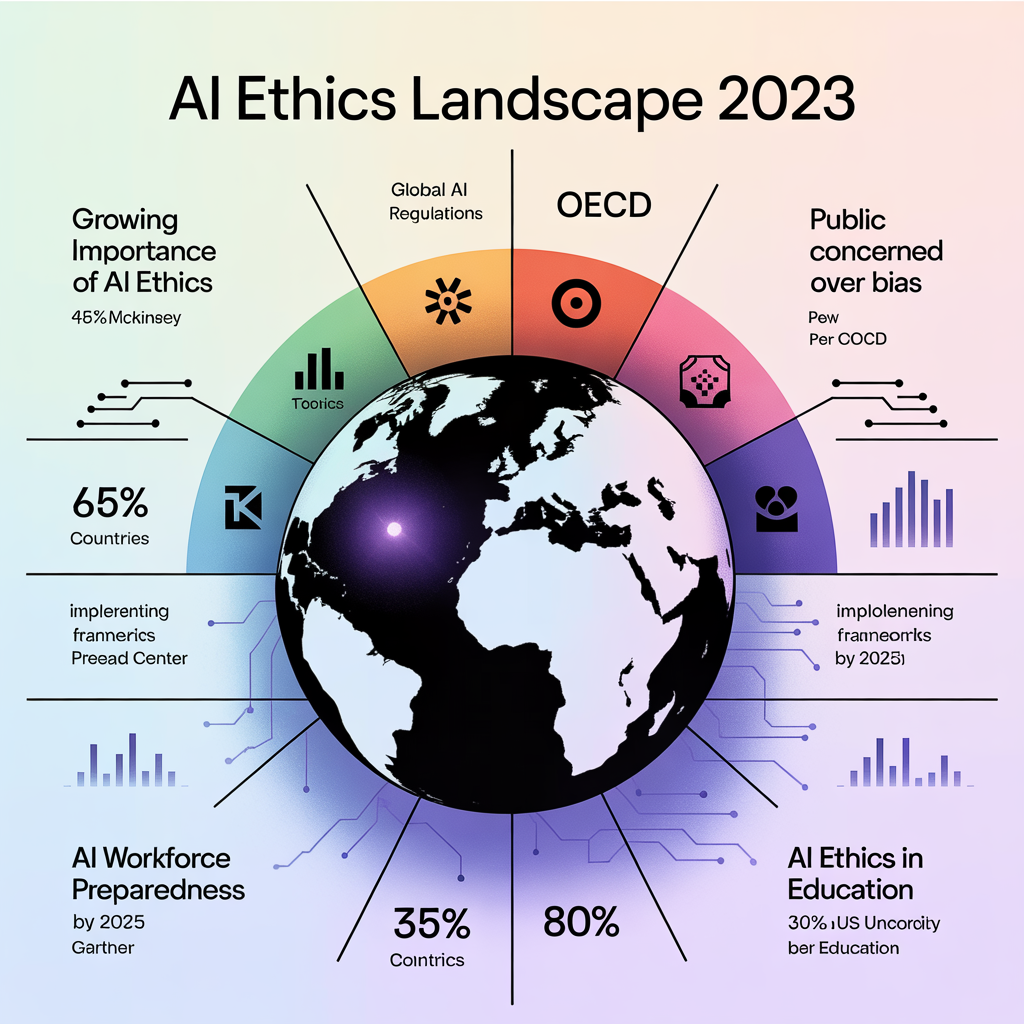
This infographic highlights the rising importance of AI ethics in 2023 across various sectors. It includes data on corporate priorities, global regulations, public concerns about bias, workforce preparedness for AI ethics frameworks, and educational initiatives in universities. The visual presentation uses categorized sections, icons, and graphs to illustrate key statistics and insights from credible sources like McKinsey, OECD, Pew Research Center, Gartner, and the Chronicle of Higher Education, offering a comprehensive overview for understanding the landscape of AI ethics today.
The Foundations of AI Ethics: Key Principles and Concepts
AI ethics is not just a set of rules; it’s a framework that guides how technology should be developed and deployed. At its core, AI ethics revolves around transparency, fairness, and accountability. Transparency means opening the black box of AI decision-making. Users and stakeholders should understand how algorithms reach conclusions. For example, in the healthcare sector, AI systems analyzing patient data must be clear about how they diagnose or recommend treatments.
Fairness is about ensuring that AI technologies do not perpetuate bias. A common issue is that AI systems trained on biased data can lead to discriminatory outcomes. Consider facial recognition software that performs poorly on darker skin tones. This isn’t just a technical flaw; it’s a critical ethical issue. To mitigate this, developers need diverse data sets and rigorous testing across various demographics.
Accountability is the principle that someone must be held responsible for the actions of AI systems. This is crucial because AI systems can make decisions that impact lives, such as in autonomous vehicles or financial services. If an AI-driven car makes a wrong decision, who’s liable? Companies must establish clear accountability frameworks to address such situations.
In my experience, one key takeaway is that ethics in AI is not static. It requires a continuous commitment to adapting policies as technology evolves. Developers must stay informed about ethical guidelines and be proactive in updating their systems. This means not only adhering to existing laws but also anticipating future ethical dilemmas. Ultimately, embedding ethics into AI design is as much about foresight as it is about current compliance.
Current Ethical Challenges in AI Development and Deployment
AI has woven itself into the fabric of our daily lives, but it brings along a host of ethical challenges that can’t be ignored. One pressing issue is bias in AI algorithms. A well-documented example comes from facial recognition systems that show higher error rates for people of color. This isn’t just a technical glitch—it’s a reflection of biased training data. These biases can lead to discriminatory practices, like wrongful arrests or unfair hiring processes. In my experience, developers often overlook the importance of diverse datasets, leading to skewed outcomes that reinforce societal inequalities.
Another significant challenge is privacy concerns. AI systems collect vast amounts of data, often without explicit user consent. Take smart home devices—they’re handy for everyday tasks but come with the caveat of constant surveillance. From a practical standpoint, users might not fully understand the extent of data collection, leading to potential misuse or breaches. The key takeaway here is that transparency and user consent are paramount to maintaining trust.
There’s also the issue of accountability. Who’s responsible when an autonomous vehicle causes an accident? Traditional laws struggle to keep up with these new technologies. This lack of clear accountability can lead to legal gray areas, leaving victims without compensation. A common mistake I see is companies focusing solely on innovation without considering the regulatory landscape.
To address these challenges, companies should adopt a proactive approach: actively seek out biases in their systems, prioritize user privacy, and work closely with policymakers to develop clear guidelines. These steps aren’t just about compliance; they’re about fostering a tech landscape that’s both innovative and ethical.
Case Studies: Real-World Impacts of AI Ethics
Artificial intelligence isn’t just a futuristic concept; it’s already shaping our world in deeply personal ways. Consider the case of COMPAS, a tool used in U.S. courts to assess the likelihood of a defendant reoffending. While it aims to assist judges in making informed decisions, the tool has been criticized for bias. Studies, including one by ProPublica, found that COMPAS disproportionately flagged Black defendants as higher risk compared to their white counterparts, even when actual recidivism rates were lower. This highlights a critical ethical concern: AI can perpetuate and even amplify societal biases if not carefully monitored and adjusted.
In healthcare, AI’s impact is both promising and problematic. Take IBM’s Watson for Oncology, designed to help doctors provide cancer treatment recommendations. Initially celebrated for its potential to revolutionize cancer care, Watson faced challenges in clinical settings. Doctors found its suggestions to be inconsistent or not aligned with the latest medical research. Despite its advanced algorithms, Watson struggled with understanding the nuances of individual patient cases and local practices. This underscores the need for human oversight to ensure AI tools are both effective and adaptable to specific contexts.
On a more hopeful note, AI is transforming agriculture in developing countries. For instance, in India, farmers use AI-powered apps to predict weather patterns and identify crop diseases early. This technology has led to increased crop yields and reduced losses, which are critical in regions prone to food insecurity. By providing real-time insights, AI empowers farmers to make informed decisions that directly improve their livelihoods.
These case studies demonstrate that while AI offers incredible potential, it also requires careful consideration of ethical implications. Balancing innovation with responsibility is key. As developers and policymakers work together, they must ensure AI systems are transparent, fair, and accountable, avoiding unintended consequences that could deepen existing inequalities.
Future Predictions: How AI Ethics Will Shape Technology
AI ethics isn’t just about preventing tech from going rogue; it’s about shaping the landscape of future innovations responsibly. As AI technology continues to evolve, ethical considerations will play a pivotal role in driving how these tools are developed and deployed. In my experience, companies that prioritize ethical AI see not only a boost in public trust but also smoother regulatory compliance. Consider facial recognition technology: firms that integrate bias detection mechanisms early in their development process tend to face fewer legal challenges and enjoy better adoption rates.
AI ethics will likely dictate the pace of technological advancement. For example, the European Union’s AI Act is already setting a benchmark. By categorizing AI applications based on risk, from minimal to high, it ensures that higher-risk applications undergo stringent scrutiny. What this means in the real world is that while innovations in areas like healthcare and autonomous vehicles may proceed cautiously, they will do so with greater public confidence and safety assurances.
There are clear pros to this ethical focus. First, it leads to more inclusive technology that better serves diverse populations. Second, it fosters innovation by encouraging developers to think creatively about how to solve ethical dilemmas. Lastly, it builds trust with users, who are more likely to engage with technology they believe is safe and fair. However, there are cons too. The most immediate is the slowed pace of deployment; rigorous ethical checks can delay product releases. Another concern is the potential for stifling creativity—developers might shy away from groundbreaking ideas if they perceive ethical hurdles as insurmountable.
From a practical standpoint, companies should invest in diverse teams to address these ethical challenges. Diverse teams bring a range of perspectives that can preemptively address ethical blind spots. In the long run, those who embed ethics into their tech DNA will not only navigate the complexities of the future but will shape it in ways that are beneficial to all.
Balancing Innovation and Ethics: Strategies for Responsible AI Development
Balancing innovation with ethics in AI development is like navigating a tightrope. One false step and the consequences could be disastrous. Responsible AI means ensuring technology benefits humanity without compromising ethical standards. In my experience, a clear framework is crucial. Companies like Google have implemented AI principles that emphasize societal benefit, avoiding bias, and ensuring transparency. These aren’t just buzzwords; they’re commitments that guide development and deployment.
A common mistake I see is the rush to market. Innovators often prioritize speed over ethics, risking public trust. Take facial recognition technology. When released without adequate bias testing, it has misidentified individuals based on race, leading to false arrests. In contrast, IBM decided to halt facial recognition sales, citing ethical concerns. This move, although controversial, highlights a commitment to ethical standards over profit.
From a practical standpoint, involving diverse teams in AI development can mitigate bias. Diverse perspectives bring varied experiences, leading to more comprehensive testing and fairer outcomes. For instance, when Apple’s credit card algorithm was accused of gender bias, it sparked discussions on the importance of diversity in tech teams. Companies can also adopt ethical review boards to oversee AI projects, ensuring they align with societal values.
But ethical development isn’t without challenges. A key con is the potential slowdown in innovation. Ethical reviews can delay product launches, frustrating companies eager to stay ahead. Another downside is the increased cost. Implementing thorough ethical checks requires resources and expertise, which not every company can afford. However, the key takeaway here is that responsible AI is an investment in trust and sustainability. As AI continues to evolve, maintaining this balance will be crucial for long-term success.
Conclusion: The Path Forward for AI Ethics and Society
AI ethics isn’t just a theoretical exercise; it’s a pressing concern shaping the future of societies worldwide. Data privacy stands at the forefront. Real-world examples like the Cambridge Analytica scandal have highlighted how personal data can be manipulated for political gain. This isn’t just a tech issue—it’s a societal one. The challenge is balancing innovation with privacy, ensuring AI systems respect personal boundaries while still offering advancements.
Bias in AI algorithms is another critical issue. Consider facial recognition software that misidentifies people of color more often than white individuals. These biases can lead to significant social consequences, from wrongful arrests to discrimination in job applications. Tackling this requires diverse data sets and inclusive AI development teams. The key takeaway here is that ethical AI development is not just about the code—it’s about the people behind it.
Then there’s the question of AI accountability. Who’s responsible when an autonomous vehicle causes an accident? Is it the manufacturer, the software developer, or the car owner? Clear regulations and ethical guidelines are essential for delineating responsibility. In my experience, ambiguity in accountability can stifle innovation, as companies fear the repercussions of unforeseen outcomes.
On a practical level, companies can implement ethics boards to oversee AI projects. These boards should include diverse stakeholders to ensure multiple perspectives are considered. Additionally, regular audits of AI systems can help identify and rectify ethical issues before they become problems. What this means in the real world is a proactive approach to AI ethics can prevent societal harm and foster trust in technology.